Showing posts with label Lamentations of the Flame Princess. Show all posts

Friday, 6 August 2021

Scepter'd Isle: Things Godly and Supernatural, Cont.

Continued from here.

With angels, devils and daemons generally outlined there are now the following supernatural creatures to consider for my Elizabethan England setting:

  1. Mythical beings.
  2. The undead.
  3. Folklore creatures.
  4. Demihumans.


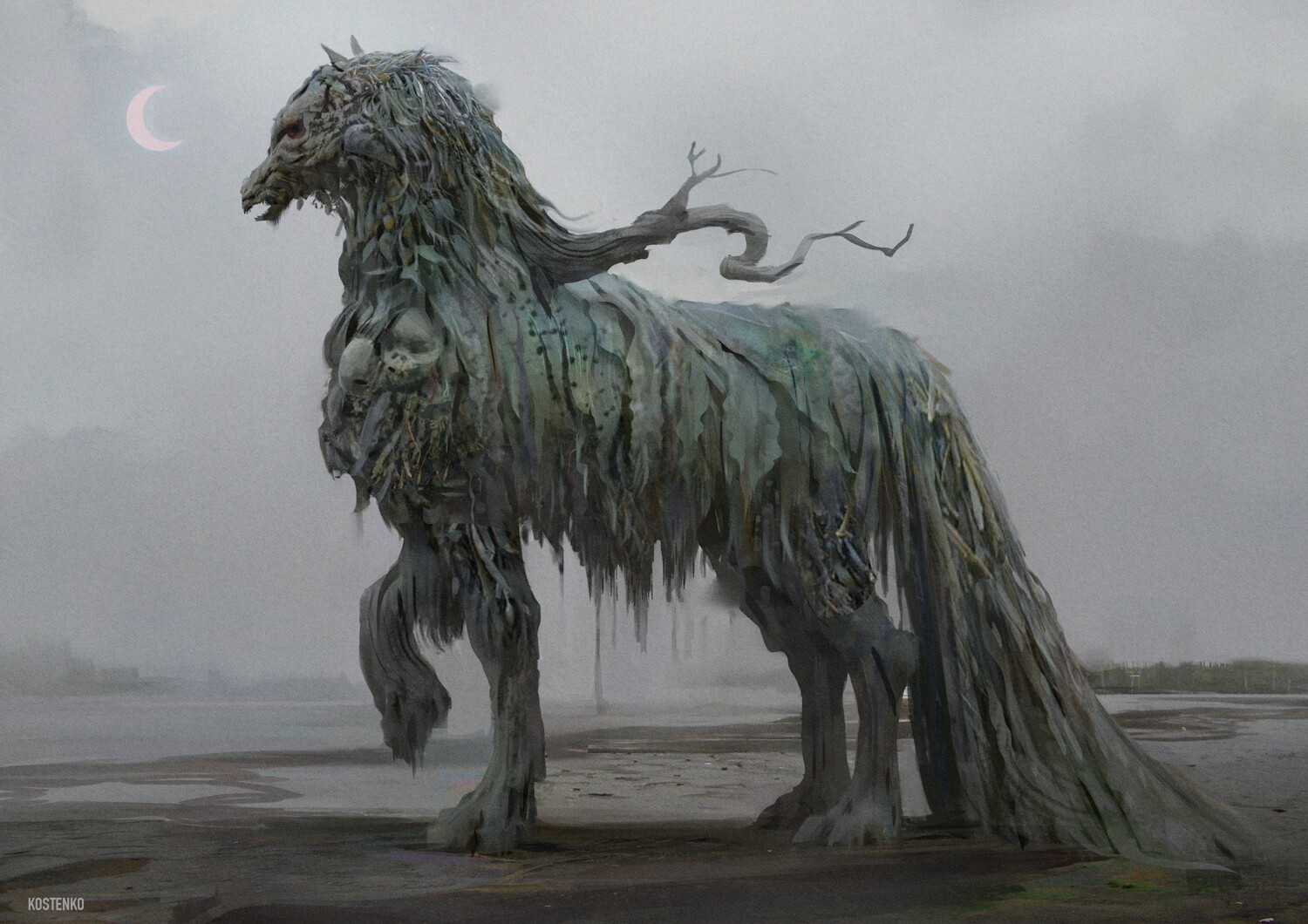
Max Kostenko

Mythical beings

The division between myth and folklore is a bit of an arbitrary distinction, myths forming a sort of 'social foundation' to a country/culture compared to a more day-to-day folklore aspect. I've taken the below as literally 'larger than life' folkloric entities:


Dragons

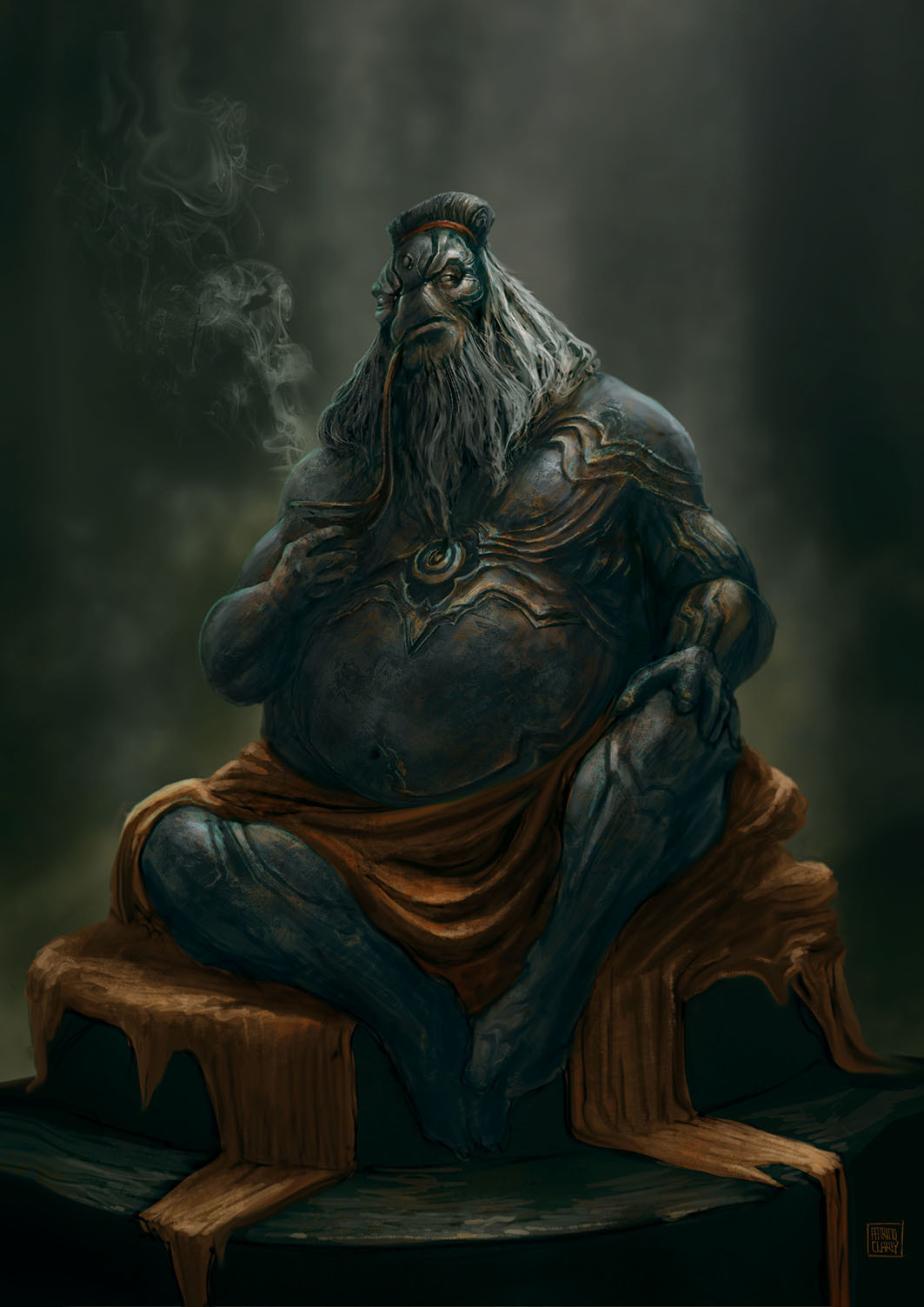
Unfathomably ancient beings commonly represented as great winged wyrms or reptiles, the reality of their existence is far more complicated. Dragons are old. Very old. Likely older than God Himself. The oldest ones could certainly match His knowledge of creation, at least. Most dragons spend aeons slumbering and dreaming in their nuclear cocoons deep in the Earth or in the void between stars - it's possible to communicate with them to an extent in this state via terrifying visions but an awakened one may deign to speak with a mortal petitioner. They may also reduce them to their constituent atoms - the ways of dragons are unknowable. Thankfully they are extremely rare. Dragons have the following common traits:
  • Polymorph: Dragons can assume many forms, from animal to humanoid. Their stats and powers do not change depending on their assumed form.
  • True Form: Considerate dragons will assume 'a form you are comfortable with' when communicating with mortals. Their true forms are more akin to balls of nuclear fire surrounded by endless fractal shapes that defy comprehension - upon being viewed by a mortal they tend to coalesce into a shimmering, snake-like form of changing size and dimension. Anyone viewing a dragon's true form must Save vs Magic or be driven insane for (1d4):
    1. A day.
    2. A week.
    3. A  month.
    4. Permanently.
  • Physical Mastery: Dragons do not use magic but their understanding of the physical world is unparalleled. They are capable of interfering with a number of physical forces, including gravity. As such they are not affected by terrain modifiers and can fly at will. They can touch a target to cause 2d10 damage through interference with fundamental forces. They are immune to most physical attacks (a thermonuclear warhead might cause some discomfort) but are vulnerable to magic, which bypasses physical laws.
  • Nuclear Furnace: A dragon's core is essentially a naked singularity surrounded by an accretion disk of white-hot matter. A dragon can harness the radiation emitted by this proto-fusion as a breath weapon against a target within 100ft - suffer 4d8 damage and burst into flames on a successful hit, Save vs Poison for half (survival will likely lead to some form of fatal cancer within the next couple of years).

These ain't your usual big lizards. Whereas angels are protected by the touch of God Himself dragons are essentially sentient relics of the early universe. It's debatable whether a survivor rationalised the appearance of a dragon as a winged reptile or stories of such beings existed and were mapped on to the appearance of a true dragon, but this is the reality behind the myth. (Un)luckily for my players, a pair of dragons features prominently in national myth, so they might run into one somehow. No one knows their plans.


Giants

When humanity was young God sent angels to watch over mankind after their expulsion from Eden. Gradually these angels came to live among their human wards and adopted their ways, taking human partners, starting families and neglecting their duties. When chastised for their laxity they fought back against what they saw as their oppression and were cast into Hell as the first devils. Their scions were cleansed from the world by Host, or most of them were. The surviving Nephilim, as they came to be known, live in their lands of Gog and Magog in the hidden places of the world, nurturing a hatred for both Heaven and Hell and plotting to return to their rightful place as the kings of mankind. All giants have the following traits in common:
  • Huge: Giants are, without exception, larger than mortal humans. How large varies on the giant, but they're big - GMs can confer advantages and disadvantages as they see fit. They are able to contort and squeeze their bodies through the smallest spaces.
  • Blood of Heaven: While they lack the protection afforded by even the lowest devil's Tarnished Adamant the heavenly blood flowing through a giant's veins confers a natural AC of 18/plate equivalent.
  • Voice of Command: Giants are above mankind in stature and authority by virtue of the divine blood in their veins. Any human who hears a spoken command from a giant must Save vs Magic or obey. A successful Save will allow them to ignore all further commands for the rest of the day.
  • Builders of Babel: Giants can understand, read, write and speak all human languages.

I wanted something more grounded in Biblical myth for giants - they have watered-down angelic powers for the most part but are also ranked firmly above humanity by virtue of their angelic blood. Where Gog and Magog may lie is a mystery, but rumours abound of the treasure hoarded by giants. Rumours also abound of grinding human bones to make bread, but what's a little risk?
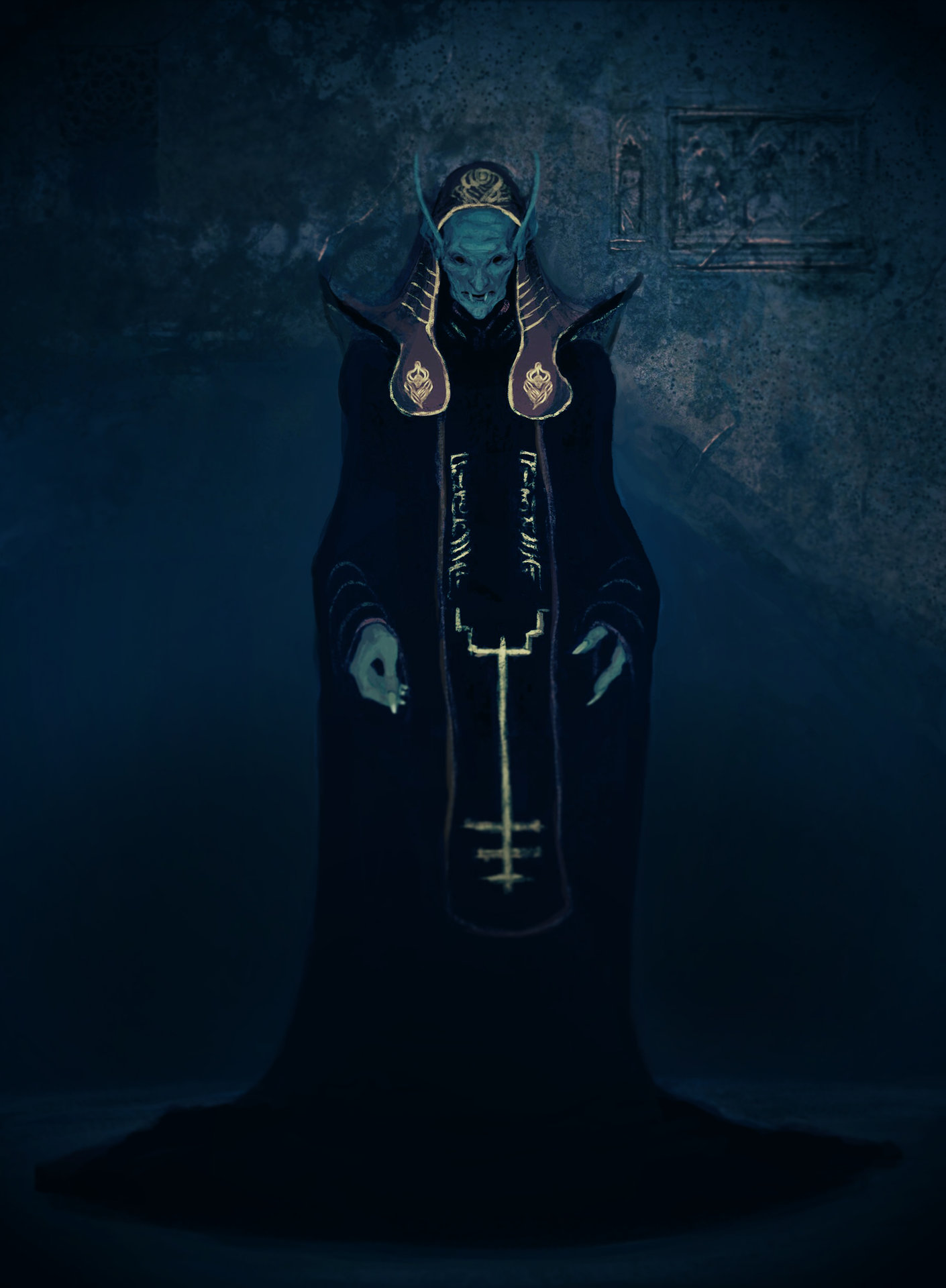
 

Andrea De Dominicis


The undead

This is quite a broad category so I'll break it down into the following subsections:


Vampires

And Cain said to Abel his brother, "Let us go out to the field," and when they were in the field Cain rose against Abel his brother and killed him. And the Lord said to Cain, "Where is Abel your brother? And he said, "I do not know: am I my brother's keeper?" And He said, "What have you done? Listen! your brother's blood cries out to me from the soil. And so, cursed shall you be by the soil that gaped with its mouth to take your brother's blood from your hand. If you till the soil, it will no longer give you strength. A restless wanderer shall you be on the earth." And Cain said to the Lord, "My punishment is too great to bear. Now that You have driven me this day from the soil I must hide from Your presence, I shall be a restless wanderer on the earth and whoever finds me will kill me." And the Lord said to him, "Therefore whoever kills Cain shall suffer sevenfold vengeance." And the Lord set a mark upon Cain so that whoever found him would not slay him.

This bit is shamelessly stolen from old Vampire: The Masquerade lore - God punishes Cain by branding him with a mark and cursing him to wander the Earth in endless hunger, and some additional unpleasantness. Cain's descendants carry the essence of this curse, becoming the first vampires. All vampires have the following traits in common:

  • Blood Drinkers: All vampires must sustain themselves on the blood of sentient beings - their teeth function as a natural weapon dealing 1d4 damage but they can only feed from a suitably restrained victim. Some are able to feed with restraint but others tear their victims apart in an animalistic frenzy - when drinking blood from a living victim a vampire must Save vs Magic or begin to savage them.
  • Shadow Dwellers: Vampires cannot venture out in daylight - every round with their skin exposed to the sun deals 1d10 damage, no save.
  • Profane: Vampires are vulnerable to holy water and can be Turned by the correct ritual/spell.
  • Marked: Though the cursed mark of their forefather is diluted, vampires still possess a natural AC of 16/chainmail.
  • Cursed Earth: Even as the Earth rejects them a vampire is intimately bound to it. They may not pass over running water (a river, stream or canal would count, but not a bucket of water tipped down a slope) while conscious. Upon sunrise they must rest on a bed of grave soil in a torpor until the night dawns once more. Failure to do so inflicts the same fatigue penalties as a PC whose rest was interrupted.
  • Endurance: A vampire reduced to 0hp is not killed unless their body is staked, beheaded and burnt, or otherwise ritually purified (a priest performing an exorcism on the body, for example). If this is not done the vampire will begin to regenerate the next night, recovering within a week to walk the night once more.
  • Embrace: A character drained of blood and killed by a vampire must Save vs Magic - on a failure they become a vampire themselves and rise at the next new moon unless their body was destroyed or given a proper burial with the correct rites.

They're vampires, what more can I say?


Incorporeal undead

Ghosts, haunts, poltergeists etc. They're traps a la Goblin Punch - this is too good to not use.


Corporeal undead

Zombies, skeletons, revenants, wights and other spooky things given animus from beyond the grave. These corporeal undead share the following common traits:

  • Profane: Corporeal undead are vulnerable to holy water and can be Turned by the correct ritual/spell.
  • Mindless: Absent direction from the magician or entity that raised them corporeal undead rely on specific instructions carved/engraved upon their flesh and bones - poorly phrased instructions can lead to unintended consequences. Spells that affect mental states will not work on corporeal undead.


Folklore creatures

Based on creatures commonly found in British folklore.
 
Most can be enticed to make a deal with a devil, if the reward is generous enough. Most, however, neglect to consider the real consequences of a Hellish bargain. Some even seek to flee and hide when the time comes to keep up their end of the bargain. What relief they may feel soon turns to terror when their steps are dogged by black hounds with burning eyes - creatures sent from Hell itself to seek and find those who would cheat their infernal masters. To see one is to see one's own death. Black hounds have the following common traits:
  • Born of Flame: Black hounds cannot be harmed by heat or fire, save for Heavenly fire.
  • Boundless Step: Once a black hound has identified a target it can teleport to within 100m of the target as a Move action. This can be performed once a day.
  • Death's Gaze: Upon spotting a black hound a character must Save vs Magic or be paralysed with fear at visions of their death and enslavement in Hell for 1d8 rounds. A successful save will protect the target from this effect for a day.

The Church tells that the Almighty created mankind in His own image during the 6 days of Genesis. The truth of this is somewhat obscured in that mankind may have been a second attempt. The elves certainly seem to think so, and they claim they were the first with the faeries created as their servants. Whatever the truth of the matter some ancient treaty grants the fey their hidden dominions outside of the sight of mankind. Some, like the brownies and hobs, choose to live near mankind and study them in their own alien way, while others stay hidden away. All faeries have the following common traits:
  • Cold Iron: Coming into contact with iron and its alloys burns faeries, causing 1d4 damage/round while in contact with the offending item/object.
  • Animal Form: faeries are capable of assuming the form of a woodland creature as a Movement action.
  • Wards: A faerie can be warded off with a charm made of rowan wood. If the faerie attempts to attack or interfere with a warded target they must Save vs Magic - on a failure they must flee in the opposite direction at full speed.
  • Out of Sight: A faerie can turn invisible as a Movement action. This can be used once per day - attacking a target or otherwise attempting to directly interfere with them dispels the effect, but pranks in their vicinity will not.

Lycanthropes
Humans cursed to transform into slavering beasts with the turn of the full moon. The original curse that caused this is disputed - some scholars believe it to be the work of a particularly powerful devil wronged by a petitioner, others that it sprang from the curse of Cain and twisted into some new dark form. It's possible to control the transformation by remaining out of the moonlight, and many of those afflicted hide away during the full moon, but once in its grip most lack the will to retain their faculties as their body twists and warps around them. All lycanthropes have the following traits:
  • Full Moon: if touched by a moonbeam during the night of a full moon the lycanthrope transforms into its animal type (i.e. a wolf for a werewolf, a tiger for a weretiger etc.).This animal is significantly larger and more bestial than a normal wild animal and usually lacks a tail - its eyes are human and the lycanthrope is able to speak in human tongues. Upon transforming the lycanthrope must Save vs Magic or hunt for human flesh, losing control of themselves for the night. If they retain control but draw blood from another creature they must Save again. While in beast form the lycanthrope gains an additional 2HD-worth of HP, their attack bonus remains the same. These HP are deducted when the lycanthrope returns to humanoid form, potentially killing them. Upon sunrise the lycanthrope returns to human form and is fatigued for a full day.
  • Silver Vulnerability: A lycanthrope is immune to physical harm save from silver, and wolfsbane-coated weapons.
  • Cursed Bite: If a lycanthrope bites a humanoid victim who then survives the encounter, the victim must Save vs Magic when next out under a full moon. Failure indicates that the curse has passed on to them and they transform.

Demihumans

This could probably do with a post of its own, given that it'll involve PCs.

Wednesday, 26 May 2021

Scepter'd Isle: Things Godly and Supernatural

In my previous post I detailed the more 'realistic' elements of an Elizabethan England setting. Now comes the decidedly 'unreal' in the form of:

  1. The 'true' nature of gods/deities
  2. Magic
  3. Weird and wonderful creatures, and demihumans

 This is, of course, largely useless to my players but I do enjoy inulding myself.


 Historia Mundis Naturalis, Pliny the Elder - Woodcut from a 1582 edition
 

Gods, Deities, and other Powers

In a real-world setting where Christian sectarian strife plays a significant role in shaping events, is the God at the head of it all real? And if so what input does he have? These are less important than you might think given that I'm not planning on using the Cleric class in this setting, for a number of reasons:

  • In a setting where the majority of Europe is dominated by some form of Christian faith and relatively large numbers of people are inducted into the priesthood I would imagine that there would be a reasonable number of Clerics present. This would imply that holy magic/miracles are somewhat commonplace, which I want to avoid.
    • As an explanation for the above - in a game where magic can be used by a person sufficiently inducted into the occult arts, having a completely separate book of spells for Clerics implies that spiritual devotion and adherence to ritual would be enough to qualify, which would dial down the weirdness. You could of course say that Magic Users have the gift and instead Clerics are chosen by a deity or other power to fulfil their will on Earth, which to me implies that they are legitimate saints capable of performing miracles. Or alternatively that they've somehow deluded themselves into having powers through sheer faith. YMMV, Clerics are out of my game.
  • Would all deities/powers provide the same spells to their followers, even if their nature and beliefs are radically different?
  • In Lamentations of the Flame Princess Clerics mechanically sit as a sort of combined Fighter/Mage that lacks the former's increasing Hit Bonus and the latter's wider range of utility spells. They have access to unique spells and can cast at a greater encumbrance level but I think removing the class and giving Magic Users access to Cleric spells helps focus the character specialisations - Fighter is kill-y, Specialist gets skills, Magic-User gets magic, demihumans are where the weird edge cases emerge. In addition I find that having easy access to healing tends to encourage my usual players into a more 'combat as sport' playstyle which I try to avoid (though that might be on me as the GM).
  • Clerics are Sunday School Mircale Makers and I can't think of a reason to not just lump their spells in with Magic Users - if I were to use a Cleric class (in the vein of a saint) I'd probably give them some sort of 'divine intervention' ability where they can channel their patron's energies but run the risk of harm and/or martyrdom.

That being said, it's fun to think about and a setting's cosmology provides inspiration for allies, monsters, powers, Faustian bargains and all sorts of weird things for players to dig into! So, does the Abarahamic God exist in this setting?

...

Maybe.

There's certainly a throne, and a Heaven, and angels, and a plan (or the remnants of one).

But no sign of Jehovah.

Metatron sits upon the throne, barely able to keep the firmament together as the kingdom of Heaven slowly crumbles around him. Such is the effort required to maintain the decaying edifice that he is able to narrate only snippets and fragments of the Almighty's cosmic plan (himself having only a limited perspective of it compared to the omniscience of his creator) to the choir of Seraphim that attend the throne and record the works of Heaven. As a result, the actions of angels make even less sense to mortals than they would with a fully functioning heavenly hierarchy. Confused mortal souls cower in the face of divine discord and it is not unknown for the angels to herd souls into the hall of the throne, never to be seen again.

The devils still inhabit the circles of Hell, both freed and imprisoned by the ancient pact with their creator. Satan reigns over the dukes of Hell but is not the same fallen angel cast out of Heaven by the host - Lucifer too has not been seen for many years. The title of Satan is claimed by the archdevils who fight internecine conflicts to claim the crown of Hell in an endless Miltonian struggle as none can truly kill the others. The souls of the damned are tormented and twisted to provide sustenance to the devils, though there are areas of Limbo that some are able to hide and persist in. The devils take great pleasure in rooting out these havens when they're not tempting mortals, planning an escape from their prison domain or organising a Black Crusade against Heaven.

Similarly, the adherents of the Hindu and Buddhist traditions find the cycle of rebirth unstable and souls achieving samsara are unable to free themselves, and unmentioned faiths would likewise find their divine hosts unsettled. Those old gods of faiths long extinguished and subsumed by the Abrahamic religions and others linger in the sidelines, bound by heavenly treaty but jealous and covetous of human souls. They may even be able to provide cryptic clues as to what malady has overtaken Heaven. Essentially the cosmological cycle of the world is fucked for reasons but the established faiths hold sway over the souls of mankind. The threat of Hell and damnation is very real, whether the Pope or other earthly ministries have any actual sway over that is less certain.

There are of course other Powers that will accept, if not necessarily care about or understand, worship - surviving nephilim, elder Elves, beings of the Veins of the Earth that were old when the Church was founded, particularly powerful and insane sorcerors, things from other realities etc. - but their abilities are decidedly limited. An elder Elf may be able to control a small pocket plane or affect the environmental conditions within a few square miles, and they certainly possess more knowledge than virtually any mortal, but they lack the reality-shaping powers of a true deity. I'll be writing more about this category later.


Thomas Honz

Magic

So if gods are maybe, kind of real, or were once at least, how does magic fit into it? Well gods might be real but the books written about them don't necessarily contain the truth, the whole truth and nothing but the truth. The influence of the Heavens on the world is strong but it is not the only influence.

Imagine a roiling sea upon which floats flotsam and jetsam. A being of sufficient energy in said sea can pull together enough materials to make their own small island - life might be easier on it but it takes constant maintenance to render it seaworthy. As a craft upon the ocean, so do the various 'dominions' float upon a sea of roiling aether - the base essence of reality. Some entities did so in the past to create the universe the world exists in - through ebbs and flows in power, reproduction and other unknowable methods the modern pantheons emerged as inheritors of their power. This aether quests for cracks in the realities it buoys and infiltrates the essence of chaos into them. Bubbles of the raw substrate of reality boil free for a time and like a mutagen their passing leaves traces on the worlds they flow through. When beings in the world manipulate and use this power it manifests as magic. It is rather risky to do so. Some creatures incorporate this power into their very being, becoming magical themselves.

A trained magician can harness and direct these flows of power into spells and rituals. Spells are your usual Vancian trigger-mechanisms - a coiled spring prepared through meditation and self-delusion that can be unwound with a word and a gesture. A ritual is a longer, more involved affair that draws on this power slowly but in much greater amounts - items can be infused with power or even greater effects can be unleashed, provided no-one interrupts. This is, of course, a strictly human way of doing things - human psychology and physiology require that that magic be shaped and formed in this manner. Other beings have different ways of doing things...

The power of this magic ebbs and flows depending on the aetheric currents - great calamities and epochal shifts have occurred as our universe shifts between raging currents and relatively still 'waters'.  In-game magic is at it's lower ebb - it's very uncommon, almost universally feared and outlawed, and while stories abound most people have little to no true experience of the supernatural.


BE NOT AFRAID

Weird and wonderful creatures, and demihumans

There's a few general categories of supernatural creatures to consider given the above. This is a general overview of each, stats and mechanics will follow in a later post:

  1. Angels, devils and other 'religious' entities.
  2. Mythical beings.
  3. The undead.
  4. Folklore creatures.
  5. Demihumans.

Angels, devils and other 'religious' entities


Angels

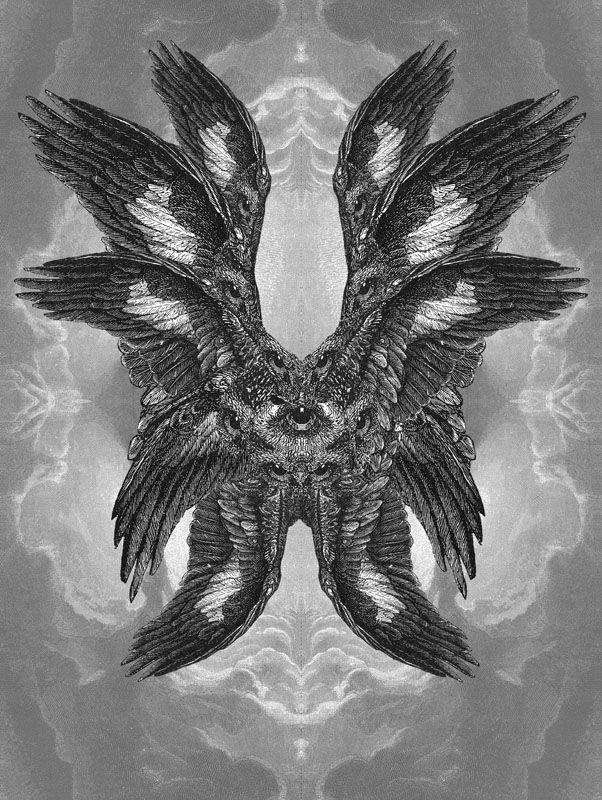
Angels are the servants of God and act as extensions of His will. Currently this involves implementing the fragments of the divine plan uttered by Metatron when he's not wholly focused on maintaining Heaven from the throne. As such their actions on Earth seem random and senseless, when they appear at all. See above for an example of what they look like - these aren't beautiful people with feathery wings but the servants of an eldritch intelligence far beyond the comprehension of humanity. Angels have the following common traits:

  • Terrifying Visage: There's a reason angels herald most of their appearances to humans with 'BE NOT AFRAID'. The human mind is almost incapable of comprehending angelic form - animals don't seem to mind - any human looking upon an angel must Save vs Magic or (1d4). If telepathy is used then there is no save and the telepath takes 2d10 psychic damage:
    1. Prostrate themselves while weeping piteously for 2d6 minutes.
    2. Flee in a blind panic until 1 mile away. They'll know when they're far enough.
    3. Be struck vacant and stand drooling in mindless terror until roughly jostled (Save vs Poison again to try and break free of the effect).
    4. Suffer a grand mal seizure for 1d6 minutes (Save vs Poison or be rendered semi-conscious for another 3d10 minutes; fatigued until the character can rest).
  • Flight: Angels are capable of moving through the air. They don't bob unless they feel like it - most of them take a linear path between points at high speed, changing speed and direction with no regard for momentum.
  • Halo: Angels possess a halo of divine light that illuminates all within eyeshot and dispels falsehood - a character must Save vs Magic or be unable to lie while within the light of an angel's halo. An angel may dim this light or increase the intensity to blind an opponent - Save vs Poison or be blinded until the light is dimmed.
  • Tongues: Angels can speak, read and understand all languages.
  • Adamant Form: Angels are immune to harm from mortal weapons, magic and forces. It is possible to bind and/or ward them for a time with the correct spells, formulae and glyphs but to cause them true harm takes astonishingly powerful magic, Hellish energies, or weapons and powers from Heaven itself. A barrage of cannon fire will barely slow one down.
The idea here is that angels are terrifying servants of an incomprehensible eldritch abomination that can and will completely fuck up your day if you get on their bad side. They have a plan and you will not obstruct the plan. Admittedly they don't know what the plan involves, but that's beside the point.


Devils

Those angels who broke the compact and rebelled against their creator continue to rail against their imprisonment in the circles of Hell. Set to watch over the world and guide humanity, certain angels became enamoured with mankind and lived among them in human form, fathering children and neglecting their duties. In time they began to resent their creator and attempted to storm the gates of Heaven, leading to them being cast down into the pit of Hell and a Biblical scourge being enacted upon their descendants. In time their isolation led to hatred and envy of humanity (with some exceptions) - though the fallen angels were free from the constraints of Heaven they remained bound in a new prison, while their former wards continued on almost blissfully unaware. The First Satan, leader of the revolt against the Heavenly Host, set to work constructing the Brass City of Dis and soon Hell was reshaped in the eye of its new rulers. The souls condemned to Hell are used as tools and nourishment for the new devils, and the Circles of Hell were born.

Their time among mankind and the infusion of human soul-essence leaves the devils with a more comprehensible mindset compared to angels - they're not entirely alien creatures though their motives are hidden and their schemes span centuries. While they war and scheme against each other the primar motivation of a devil is to escape Hell and extend their dominion over creation. Devils share the following common traits:

  • Mutable Form: A devil can change their size and shape as a Main Action. They can assume human form (though with a mark somewhere on their body that marks their true nature) and can dissolve into shadow. Smaller forms will change their relative stats but they can't increase their stats and abilities beyond their normal maximum by increasing in size.
  • Hellish Pact: All devils can form a bargain with a willing sentient creature. This bargain must be made freely (not under duress or threat) and both parties will be immutably bound by its terms until the pact is fulfilled. There is no save against this, the law is immutable.
  • Telepathy: Devils can speak directly into a person's head. They can't read their thoughts but they can project their voice inside a target's skull. They can control the volume from barely audible whispers to thunderously loud. They can do this to any target in eyeshot, or to a target whose location they can scry. Save vs Magic to resist the effect for a day.
  • Possession: All devils are capable of possessing people and animals. Animals can be possessed at will. To possess a sentient target they must maintain an unbroken telepathic link for a week before invading the target as they sleep as a Full-Round Action - Save vs Magic to resist the effect (this will also break the telepathic link). Receiving the Eucharist from an ordained priest automatically breaks this a telepathic link and confers a +4 bonus to saves against it over the next week. If a church service is missed then the bonus is lost. For every additional week spent maintaining the link, or prior successful possession, the target takes -2 on their save. When possessing a target the devil still cannot read their thoughts but otherwise has complete control of them. The target's appearance is normally unchanged while they are possessed unless the devil wills it, but gains access to powers specific to the devil. The first possession lasts for 4 hours, the second for 8, the third for 12 and so on. In the aftermath of a possession the target must Save vs Magic or suffer an erratic episode for 1d6 hours afterwards (treat as under the effects of the Confusion spell). Regardless of whether the save is successful or not, the possessed has little to no memories of the possession save for a distinct sense of unease and nausea. Once the devil possesses the target for 24 hours the target can no longer save against possession and can be possessed by the devil at will. The devil is capable of leaving a fraction of their awareness possessing the target, i.e. if engaged in combat, but the possessed target makes all rolls with disadvantage until direct control is assumed. A possessed target can be exorcised by a priest which effectively 'resets' the possession modifiers, breaks an existing telepathic link and/or ongoing possession, and prevents the devil from scrying the target for 1d6 months - Save vs Magic, a success leaves the target fatigued for a week in addition to the above, failure does 1d10 damage and immediately provokes a possession attempt. An exorcism is subject to the following modifiers:
    • -2 for each prior possession.
    • -2 if currently possessed.
    • -2 if the target has committed a grievous sin that they have not atoned for.
    • +2 if the exorcism takes place on hallowed ground.
    • +2 if the target is anointed with holy water.
    • +2 if the target is touching a true relic of the Church.
    • +2 if the target has confessed and undertaken penance for their sins.
    • An exorcism in the presence of a friendly angel is rolled with advantage.
  • Tongues: Devils can speak, read and understand all languages.
  • Profane: Devils are vulnerable to the effects of holy water.
  • Tarnished Adamant: Due to their rebuke from God devils take half damage from all mortal weapons and full damage from magic. They will take full damage from Heavenly weapons and most Hellish weapons.

Devils are slightly more accessbile in their thinking but desire to use humans for their own ends. The abilities here play into the 'chessmaster' style of devil who seeks to manipulate, dominate and control for their own ends. They are also still capable of flattening most mortals but are not as durable as angels.


Daemons

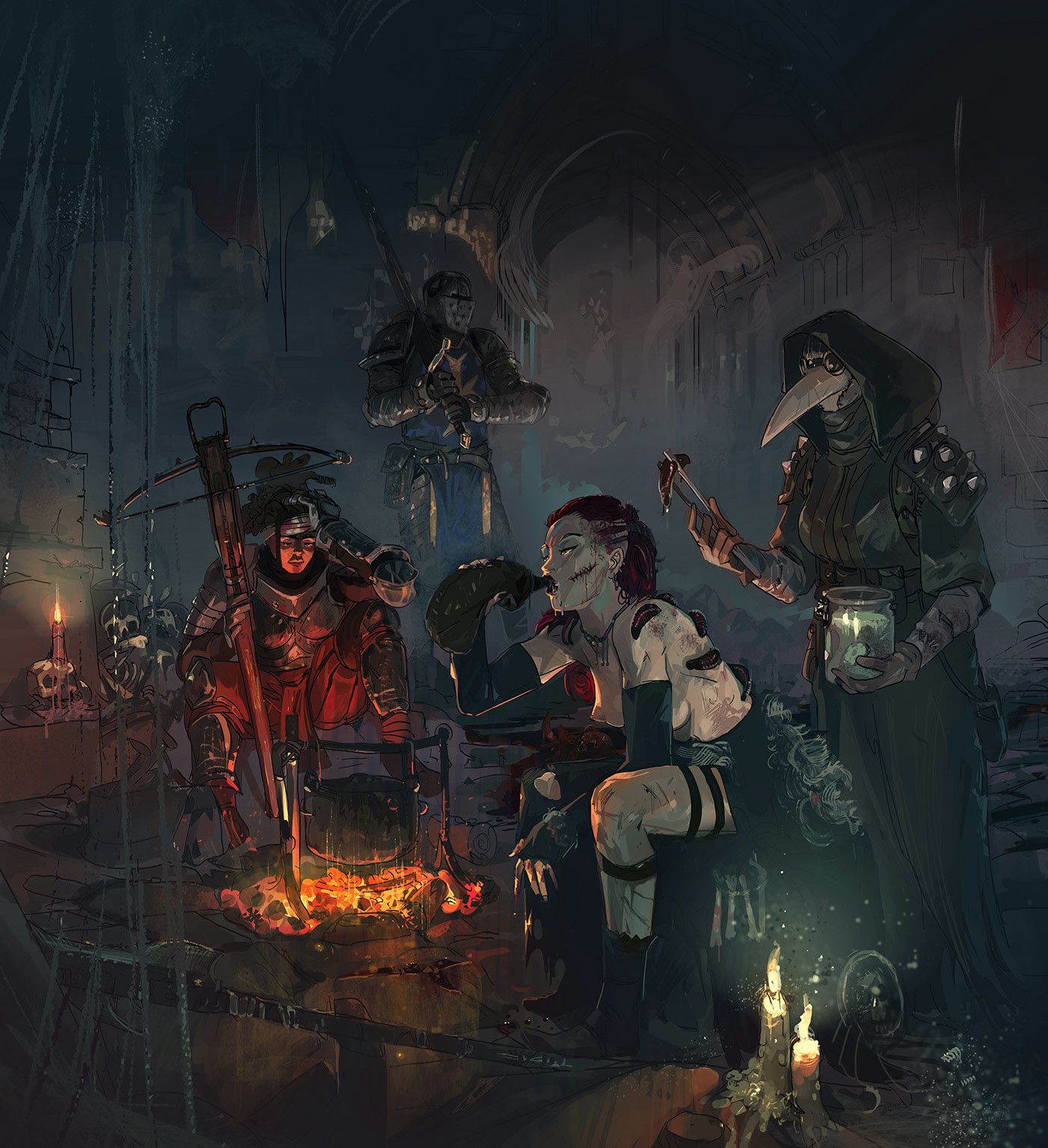
Night creatures spawned from Hell's twisted souls to do the bidding of devils and those they contract with. The devils have grown exceedingly proficient at flensing and reconstituting the souls of mortals into forms more useful to them. The experience is quite agonising and few daemons are capable of thought beyond a slavering bloodlust. Those that retain their faculties are highly prized. Some brave and foolish mortal sorcerors who enter a pact with a devil may be granted use of daemons under the devil's control, some even more brave and foolish attempt to pilfer daemons for their own purposes without the security of a pact - a much riskier proposition. Daemons share the following common traits:

  • Bound Corpus: Daemons are beings of soul-stuff bent into myriad forms by the will of devils. While they have form in the Outer Spheres they cannot manifest in the world without a body. Anyone attempting to summon a daemon must provide a suitable body (or other quantity of meat) to house it. The daemon is then sealed into the 'body' with a binding glyph - if this is destroyed the daemon explodes in a rush of soulfire dealing 2d10 damage to everything within 10 metres (Save vs Breath for half). Reducing the daemon to 0hp has a 1-in-6 chance of breaking the binding. If struck by a critical hit the daemon must Save vs Poison - failure means the binding has been broken.
  • Bloodlust: Daemons are driven to consume flesh and blood. If not directly commanded a daemon must pass a Morale check whenever it is within 10 metres of a wounded creature - failure means it moves to attack and consume that target, regardless of whether it is a friend or foe. If there are multiple targets within range roll randomly to select.
  • Chaos Unchained: If summoned without the permission of a devil the summoner must make a Domination roll as per the Summon spell - if successful the daemon will be permanently bound. However if away from its master's presence for over 7 days, Save vs Magic - success means that the daemon has slipped its bonds and gone feral. It will lair and hunt and consume until slain or recaptured by its master. 'Presence' is determined loosely - within the same city would be fine but not further away than this.
  • Profane: Daemons are vulnerable to the effects of holy water.

Daemons are a specific type of summoned entity. I love the Summon spell but I often find players are more reluctant to use it given what can go horribly wrong - this allows them a more control over the outcome (though I'll do a specific table for daemons to distinguish them from truly eldritch abominations that slither between realities) but also prods them into getting involved with literal Satan. I think that's a happy compromise.


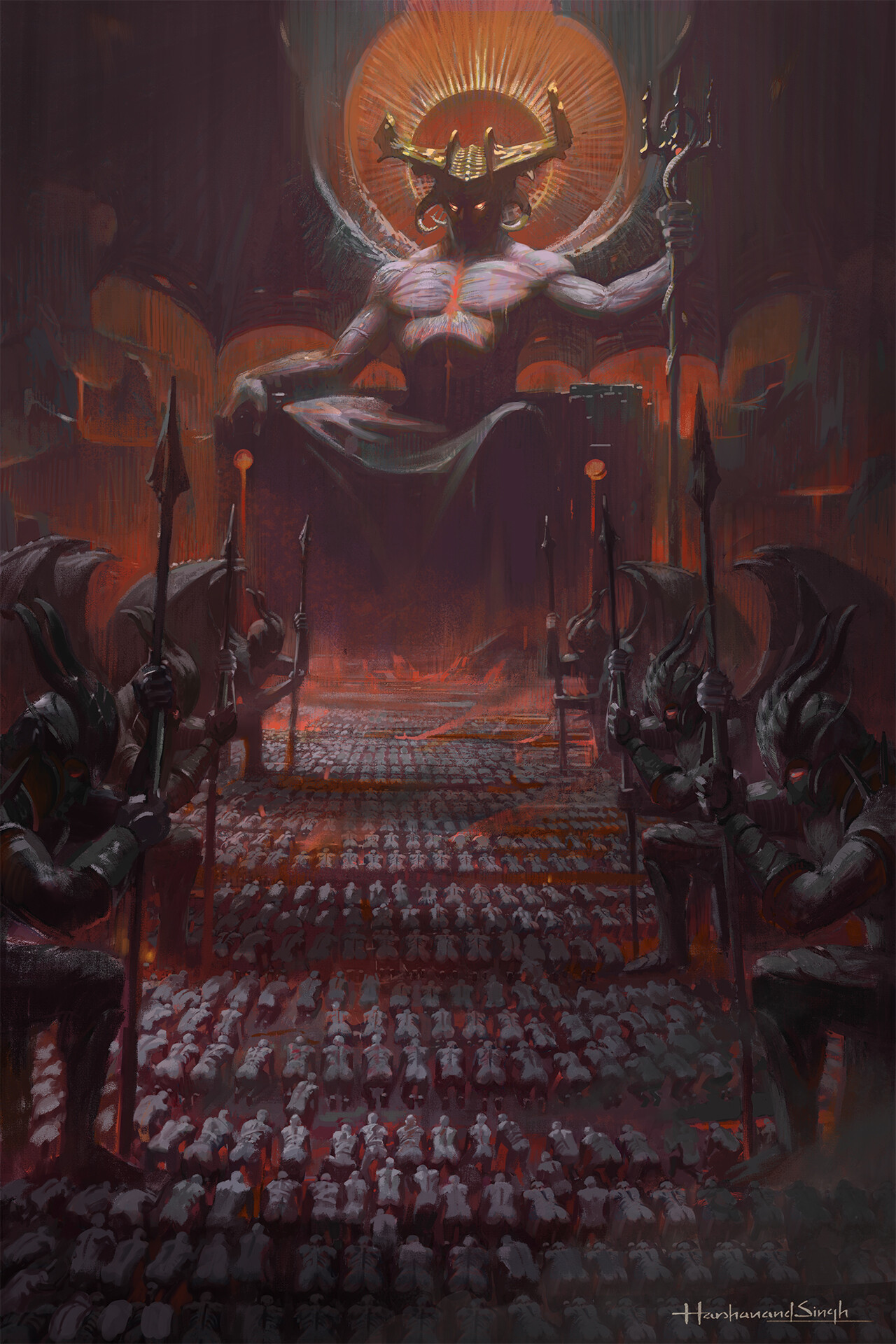
Harshanand Singh

Given that this post has gotten pretty long I think I'll leave it there for now and do the mythical beings, undead, folklore creatures and demihuman sections in a subsequent post.

Saturday, 22 May 2021

Scepter'd Isle: Lamentations of the Flame Princess in Elizabethan England

This is it. The big idea. What if I took Lamentations of the Flame Princess, and plonked it in an Early Modern setting? Original, right? Again, see the blog tagline (and Tim, if by any small chance you read this, thanks for running a great campaign and planting these seeds). Anyhow, here's the plan: Lamentations of the Flame Princess set at some point in the reign of Elizabeth I (1559-1603), with the possibility of continuing into the Stuart era after that. There are several areas that need to be considered for such a real world setting:

  1. Key events and dates
  2. Key personages
  3. Society and technology

In addition there are the usual fantastical elements to consider:

  1. The 'true' nature of gods/deities
  2. Magic
  3. Weird and wonderful creatures, and demihumans

Disclaimer: I am not a historian, I am an enthused amateur with access to Wikipedia.

So without further ado...

Sushkin

Key events and dates

This is a general list of key dates relating to important people, places and things focused on the Kingdom of England in this time period. At this point England was very much in the opening stages of building what would eventually become the British Empire - Columbus' final journey had only taken place some 50 years past, and the survivors of Magellan's circumnavigation returned to Spain only a couple of decades after that. At the start of Elizabeth's reign England's main overseas possessions were a series of Plantations in Ireland (Calais having been lost shortly before Elizabeth ascended the throne) but by the turn of the 17th century two English colonies had failed in North America (I like to refer to them as 'Roanoke: Population 0' and 'Roanoke II: Starvation Boogaloo'), colonies had been established in Jamestown and Bermuda, the East India Company had gained its first footholds in Asia, and the colonisation of Ireland really took off.

As such, while England was by no means a stranger to brutal overseas exploitation most of this was conducted somewhat closer to home than during the mainstream imperial period (although the people of Ireland were continually treated despicably and at times genocidally so). European opposition to England in this period came largely from the Spanish Empire under Philip II as France (England's bitter rival for most of however long the two polities have existed) was embroiled in internal religious strife which left it inward-facing. Scotland, the traditional ally of France, likewise maintained reasonably peaceful relations with England throughout Elizabeth's reign (at least when compared to Elizabeth's father, Henry VIII) and was largely concerned with a similar internal tension between Protestant and Catholic factions as found in England. The Low Countries were a staunch ally of England in the latter part of the era, with Elizabeth supporting the Dutch Protestants in rebelling against their Spanish overlords.

Internally, England was riven with the divisions that arose out of the Reformation and counter-Reformation. This led to open rebellion early in her reign and a number of plots and intrigues that prompted Elizabeth to execute her imprisoned cousin (who had already been forced to abdicate the Scottish throne by a faction of Protestant nobles) and stage a harsh crackdown on Catholicism. At the same time efforts were made to mend the rift between not only Catholics and Protestants, but between conservative Protestants (who supported the Anglican Church) and more radical groups like the Puritans - a settlement was gradually enacted which attempted to include elements of Catholic ritual and symbolism in a 'high church' style while also allowing greater leeway in personal belief regarding certain Christian sacraments and ensuring the Church's independence from the Papacy. It was a decidedly spit and duct-tape solution that remained in place until the Puritan-dominated Parliamentarians dismantled the settlement during the Wars of the Three Kingdoms, only for it to be reintroduced with renewed vigour after the restoration of the monarchy following Cromwell's death in the 17th century. A combination of Catholic-Protestant conflict and England's early colonial ambitions in Ireland lead to probably the largest cause of internal conflict in the Nine Years' War where Irish lords fought against English incursions into Ulster and their initial success led to other Irish lords joining them, notbaly in Munster. While the prospect of an initially successful pseudo-rebellion* was disturbing in and of itself, the actions of the Earl of Essex (Elizabeth's favourite at court) in the Irish campaign led to him attempting a coup in London.

*The Irish lords were native Irish chiefs, the Crown only really controlled the Pale and the Anglo-Irish lordships that owed them fealty were often tenuous and prone to revolt - the English occupation of Ireland from the Normans onwards ebbed and flowed in its intensity before the Plantations and Cromwell's genocidal conquest finally cemented English control over the country.

With the above in mind I've prepared a short summary of what I find to be key dates in Elizabethan England, showcasing events relating to internal intrigues, wars and important battles, and important events and accomplishments. The idea being that these provide 'beats' in a campaign to focus certain adventures around or to just affect the flow of the game and the overall setting:

    • 1559 - Elizabeth I crowned Queen of England.
    • 1560 - Elizabeth charters the 'Sea Dogs' with letters of marque to prey upon Spanish shipping in the Caribbean.
    • 1562 - English privateers first recorded taking people as slaves in what is now Sierra Leone and pioneering the Atlantic slave trade in England.
    • 1567 - Mary, Queen of Scots, is forced to abdicate the Scottish throne in favour of her infant son, James VI.
    • 1569 - The Rising of the North - Northern English Catholic lords rebel against the Crown in favour of Mary, Queen of Scots.
    • 1576 - Martin Frobisher begins expeditions in search of the North-West Passage.
    • 1577 - Drake’s Circumnavigation.
    • 1583 - James VI of Scotland freed from captivity in Ruthven Castle. The young king begins to solidify his authority among the Scottish nobility. European ships, often fishermem, are known to gather at the site of modern St. Johns in Newfoundland, though no permanent settlement occurred.
    • 1585 - Outbreak of Elizabethan War with Spain. Three ‘Cautionary Towns’ occupied by English troops in the Netherlands. Roanoke colony founded.
    • 1586 - Babington Plot foiled by Sir Francis Walsingham, harsh crackdown on Catholicism. Treaty of Berwick signed between England and Scotland, officialy declaring peace between them. Roanoke colony abandoned, survivors introduce maize, tobacco and potatoes to the British Isles.
    • 1587 - Execution of Mary, Queen of Scots. Second Roanoke colony founded in the Chesapeake Bay.
    • 1588 - Defeat of the Spanish Armada.
    • 1589 - English Armada fails to stir a Portuguese uprising and is defeated.
    • 1590 - The North Berwick Witch Trials take place in Scotland, sparking off a craze which sees 3,000-4,000 people burned at the stake over the next few decades. Second Roanoke colony discovered abandoned.
    • 1593 - Beginning of the Nine Years’ War in Ireland - Hugh O’Neill and Hugh Roe O’Donnell rebel against the English Crown.
    • 1594 - Walter Raleigh’s expedition to find El Dorado sets sail.
    • 1595 - Irish victory at the Battle of Clontibret.
    • 1596 - English and Dutch forces capture and sack Cadiz. Second Spanish Armada falters in storms. The Spanish Crown is bankrupted by the cost of the failure.
    • 1597 - Third Spanish Armada falters in storms.
    • 1598 - Irish rebels win a major victory at the Battle of the Yellow Ford. Philip II dies.
    • 1599 - Globe theatre constructed in Southwark.
    • 1600 - East India Company chartered by Elizabeth I.
    • 1601 - Earl of Essex attempts a coup d’etat at court, fails, and is executed.
    • 1602 - Major English victory at the Siege of Kinsale.
    • 1603 - Death of Elizabeth I and ending of the Tudor dynasty. James VI of Scotland  is crowned James I of England, beginning the Stuart dynasty. End of the Nine Years’ War in Ireland with the Treaty of Mellifont.
    • 1606 - Private Plantations of Ulster begin.
    • 1607 - Jamestown colony established in Virginia.
    • 1609 - Official Plantations of Ulster begin. Eighty percent of Jamestown colonists die of disease and starvation.

    Sunday, 21 July 2019

    Tomb of the Serpent Kings: Session 1

    Finally got around to running a session using my in-development Yoon-Suin Lamentations of the Flame Princess hack. I decided on using Skerples' Tomb of the Serpent Kings as one of the players hadn't experienced OSR gameplay before and I thought I'd put its teaching-dungeon credentials to the test (note: it succeeded, excellently).

    The PCs are as follows:
    • Juddah Squelch - a slug-man from an opium-trading oligopolist clan.
    • Pierrot - a magician from a warrior family.
    • Lugash Primiestki - a dwarf from an architectural artisan hold.
     Having gotten themselves into a fair amount of debt, and having run out of familial goodwill to look after them, the party found themselves following the rambling of a feverish beggar outside the tea house they frequented and ventured into Old Town. Deep beneath the foundations of a collapsed manse they found their target: a tunnel entrance engraved with serpents.

    Not far inside lay several rooms containing wooden coffins. After carefully examining and opening one of them, Lugash threw caution to the wind and smashed the terracotta snake-soldier inside. The the room immediately filled with poison gas billowing from the hole in the terracotta figure, luckily only affecting Pierrot.

    The party settled into a steady routine of carefully prising open sarcophagi and hurling stones from a safe distance until the outer tomb was free of poison gas. They collected a decent collection of shiny gold amulets for their trouble and Pierrot, still suffering from his previous poisoning, popped on a silver ring granting him a snake-bite like finger-dagger-thing, which he was thoroughly impressed with.

    A barred stone door blocked the way further into the complex, and the party fortunately noticed the mechanism raising the door brackets as they lifted the bar. Further investigation revealed a false ceiling above the door. Lugash rigged a pulley with his block and tackle and the party hoisted the bar out of the way from a safe distance, as an enormous hammer swung down and smashed the stone door (and the block and tackle) to smithereens.

    The next chamber held three ornate sarcophagi. A rock thrown from afar disturbed the skeletal inhabitants. Pierrot conjured some crystalline armour (retaining the spell) and after a few crossbow bolts and judicious use of the hammer trap (including a shotgun-like blast of bone fragments from one skeleton tearing another apart) the party continued onwards, finding a grotesque religious fane and an exposed hidden passage.


    Mikhail Greuli


    The passage led to a statue lined corridor. Noticing one of the statues was slightly askew, the party discovered a hidden passage leading to an old guardroom containing weapons and shiny loot. They continued from there to a large chamber with numerous side-rooms and a pit in the centre. A smell of licorice filled the air and a muffled thumping echoed from one of the side-chambers. Pierrot and Lugash took a look in the pit only to be attacked by a pair of crawling, mummified serpent hands that leapt from the filthy water within. Pierrot was mildly throttled but the party survived mostly unharmed, and more importantly disease-free, and took to exploring the side rooms.

    Discoveries included: a room full of terracotta-army style snake warrior statues, which were duly smashed and a hidden passage found; a silver and emerald icon in a former-dormitory, along with some ancient scrolls in a strange tongue; an unfinished, partially collapsed room; and a set of trapped stairs leading downwards (again, judicious rock-throwing was the party's friend).

    The final room that the party investigated held another wooden sarcophagus, only this one contained a foul black slime creature that the party easily outran and sealed inside. It attempted to worm under the door but was driven back, and the party assembled a pre-made bonfire in front of the door in case more fire was needed.

    In need of a rest the party made camp in the hidden guardroom, and Pierrot successfully shook off the lingering effects of the poison gas. The party returned to the pit room, and carefully avoiding the source of the thumping and banging, examined another tomb with some sort of metal plate attached to the far wall.

    Juddah, despite continuing the careful rock throwing of earlier, stepped onto a pressure plate and was blasted with a bolt of lightning which caused a serious injury and fried their brain, causing them to attack their companions in a wild fury. Pierrot and Lugash attempted to restrain the insane slug-man, but the slippery dilettante proved too much and crippled Pierrot's arm with a blow from their polearm. Lugash and Pierrot took the opportunity to flee with the only light source, leaving the maddened Juddah swinging wildly in the dark. The slug-man's incoherent screams were abruptly cut off as Pierrot and Lugash heard a distinct splashing sound.


    Lorenzo Nuti


    Lugash tore up some spare clothing for bandages and managed to stem Pierrot's bleeding before going back to the pit. Using his darkvision and a length of rope, the dwarf hauled Juddah's body out of the pit and stripped it of valuables before returning it with a swift kick.

    Upon returning to the Yellow City Pierrot was easily able to afford the standard of living befitting one of his family. Lugash was able to bluff his way through and went on a spending spree of equipment, before depositing his remaining money with a consortium of moneylenders and undertaking some legwork in the city, whereby he beguiled a group of merchants with stories of snake-crafted treasure. Pierrot sought the services of a physician which put them only a few weeks away from recovering from their grievous wound. They also recruited a labourer, Bepo, to assist them on their next adventure. The magician also uncovered evidence of a slug-man merchant named Surya Sodi who was smuggling goods through the city - a juicy piece of blackmail material. Through unknown means they also acquired a crab-man slave named Mr Krabbs*.

    *Sometimes I really hate my players.

    Thursday, 18 July 2019

    Yoon-Suin: Disease, Poison, Death & Dismemberment

    As seems to be relatively common among OSR games, I'm running HP in my games as a buffer for real damage. It's relatively easy to recover HP but the moment it's out you start taking some really nasty damage.

    I've had a look round and decided to base my Death & Dismemberment system on James Young's So It Looks Like You're Gonna Die pamphlet, which in turn is based on Hack Slash Master's Crit Table (endless iteration!). I've made some changes, which I'll describe below, but some entries are copied wholesale because it's really hard to come up with over 100 distinct injury entries.

    The system covers the following:
    1. Regaining HP
    2. Ability damage & XP drain
    3. Wound tables & recovery
    4. Shock
    5. Poison
    6. Disease


    Stepan Alekseev


    Regaining HP

    Regaining HP is easy and can be done in one of two ways:
    1. An hour's lunch break with a campfire, food and drink restores 1d8+CON HP.
    2. A night's rest with a bedroll and a campfire, plus food and drink if you've not rested already, restores all HP. If anything is missing, it instead restores 1d8+CON HP like a lunch break.


    Ability damage & XP drain 

    Some monsters (and other things) can directly damage your stats, you die if any are reduced to 0. Damaged Ability Scores regenerate at a rate of 1 per day if you are active, or 1d6 per day if you rest (no adventuring or strenuous activity).

    Really dangerous supernatural creatures can drain your XP (they suck the life and vitality right out of you) and cause you to lose levels if enough is drained. If you lose a level due to XP Drain your character immediately ages 2d10 years, and can take penalties due to advanced age. XP Drain cannot be reversed, save by powerful magic or artefacts, but you continue to gain XP as normal from your new total.


    Wound tables & recovery

    See the basic draft of the wound tables (to be fancied up). If you're taken below 0HP you count the extra damage into the negatives to find where you land on the appropriate table and suffer the effects. If you suffer any further wounds while recovering you progress from where you previously landed. Some entries to be clarified: +Fire, +Acid, +Lightning have specific effects if the wounding attack was based on them; +LMA stands for 'Lightning & Metal Armour', which (at the risk of sounding redundant) can take effect if you're struck by lightning while wearing metal armour.

    You need bed rest/light duties to recover from wounds. Each wound has a duration that it takes to heal. Once per week, while getting bed rest in comfortable surroundings, you can be treated by another character with the Medicine skill. Success means your recovery is sped up by 1d6 days. Failure means that some element of your Wound becomes permanent due to the physician's incompetence. Alternatively you can pay for a physician to care for you in downtime - each day of medical care paid for counts as double your recovery time.

    Both arcane and divine magic can provide healing. HP is restored first, then start knocking off recovery days. Save vs Luck when your wounds are magically healed - if you pass then you can be magically healed again the next day, otherwise you require a week's rest as the magical energies sap your strength. Certain spells can also cure Poison or Disease.


    Shock

    Shock represents internal and/or ongoing damage from attacks. Unlike wounds, shock stacks each Round with the effects getting progressively worse.There are two important factors here:
    1. A character's Shock Rating - this is the amount that they progress down the shock track each round. When suffering a wound that causes 'Shock X', use this for the initial Shock Rating.
    2. A character's position on the Shock Level - this determines the ill-effects they suffer on the shock table.

    Shock is tracked at the end of each Round, so a character with a Shock Rating of 2 would progress down the track by 2 each Round. Shock can be removed by a successful Medicine skill roll, which reduces a character's Shock Rating and Shock Level by the margin of success on the roll (minimum 1). Bandages boost a Medicine skill roll to remove shock by +1 and are used up whether or not the roll is successful. The ill effects of shock are incremental - each level represents the total penalty. Shock is treated as ability damage - a character will recover from the ill effects of shock once their stats have recovered to their normal levels.


    Poison

    Like Shock this builds up over time and has a Poison Rating and Poison Level, but is tracked every Turn instead of every Round.

    The Medicine skill can't help you here, but save vs Doom each Turn - on a success you lose a point of Poison Rating and decrease 1d6+CON spaces on the Poison Level track. Like shock, the poison track is not cumulative.


    Disease

    Diseases also use a track system, but this is a strict progression instead of having a Rating and Level like poison and shock. Disease is tracked in intervals instead of Round and Turns - each disease progresses at different intervals, some daily, some weekly etc.. Make a save vs Doom when the interval's duration has passed - being treated with a successful Medicine check provides a 1d4 bonus - on a failure you progress to the next stage of the disease. You require a certain number of successes to shake off the illness. As diseases take longer to develop their tracks are unique, so each plague brings different hazards.

    Sunday, 14 July 2019

    Yoon-Suin: Downtime

    With further thanks to James Young for several of these entries.

    So you made it out of whatever godsforsaken tomb you delved into, and you even have something shiny to show for it! You high-tail it back to the markets of the Yellow City to pawn off your ill-gotten gains and then... Well you're stuck here for the next month, you'd better find something to do.

    When you return to civilisation, follow these steps:
    1. Cash in your treasure and decide how much of your debt to pay off (if any).
    2. Divide up the remaining treasure for XP purposes - 1 silver ring = 1 XP.
    3. Hold funerals for fallen companions - you can trade in their XP for silver rings spent on the funeral(s).
    4. Determine your lifestyle costs for this month.
    5. Go shopping! You can buy equipment, hire retainers and recruit hirelings in this step.
    6. Choose up to 2 downtime activities, as detailed below. Crab-men have a special set of options, decided upon by their master.
    7. Level up, if you can
    Additional downtime activities may become available to you depending on how your characters progress.


    Reliah A.

    Regular Downtime Activities

    Carouse 

    You hit the town hard. Your indulge yourself with hedonistic indulgence in opium, tea, rice liquor, whores, and gambling. In mechanical terms you pay up an amount of silver and immediately gain that amount of XP. Your life of excess can have consequences, roll 1d10:
    • On a roll of 1 you become addicted to opium (roll again, 1-2 indicates a rare type).
    • On a roll of 2 your profligate spending lands you further in debt - roll 2d6 and add the total to the party's debt in gold rings.
    • On a roll of 9 you remember a story or rumour regarding a nearby location told during a night of unspeakable excess.
    • On a roll of 10 you immediately recruit a hireling - they're in this more for a laugh than anything and will only expect a quarter-share of treasure in the next session's adventure. They'll want more after that, of course.


    Bank

    Limited to Social Rank 6 or above. You deposit an amount of silver rings into an account run by a reputable and stable moneylender or oligopolist clan. This pays out a guaranteed 2% each month. You can nominate a successor to inherit your wealth if the worst happens, but a death tax of 10% applies your savings. If your Social Rank drops below 6 then your money is quietly returned to you and your account closed.


    Invest

    As per the Lamentations of the Flame Princess core rulebook. You invest a sum of money in a business venture hoping for a good return, paid out annually. You choose whether the investment if Stable, Risky, or Wild:
    • A Stable investment grows by 1d8-4% per year.
    • A Risky investment grows by 1d20-10% per year.
    • A Wild investment grows by 1d100-50% per year.
    Add 10% to the above if you have an accountant managing the investment for you. If the final growth is positive you receive that amount to do with as you please. If the growth is negative you get nothing and the value of the investment decreases. The yearly return amounts 'explode' (positively and negatively) - if you roll the maximum on your investment die, roll again and add this to the total. If you again roll the maximum, make another roll, and so on. Do this for the minimum roll as well, and subtract that number from the return.

    If you wish to withdraw your investment, you can only do so freely at the time of the yearly return. Otherwise a penalty of -1d6+4% is applied to the sum returned.

    There is also a chance that any investment will go Bankrupt! during a given year and your investment vanishes:
    • Stable: 5%
    • Risky: 10%
    • Wild: 25%


    Magical Research

    Magicians and slug-men can devote time to arcane research in an attempt to research new spells. Holy-men can meditate and pray on divine mysteries to expand their portfolio of divine invocations. The process for each of these is identical - you pay 100 silver rings to cover the costs of your alchemical materials/divine incense etc. and roll for a new spell/invocation. You can pay in multiples of 100 to reroll the result, but you must specify this beforehand and all payments are final - you don't get a refund for unused rerolls.

    To make a magic item you must pay 1d6gp to purchase commonly available reagents.

    You must use materials that are soaked in magical, spiritual or otherwise otherworldly energy when creating something magical. For example - regular parchment can't hold the magical energy needed to make a magic scroll but the ritually tattooed and tanned skin of a prince, a strip of cloth from a fakir's robe, or a spell etched into the scale of a dragon definitely could. Likewise a regular length of wood is entirely unsuited for use as a magic vessel, but the finger of a treant, or the petals of a lily that grows in a magic spring would be perfect for a vessel or potion base, respectively.

    Inscriptions are one-use instances of a spell - when they are cast the inscription crumbles to ash and adds an extra level of the appropriate class to the spell effects. Thus, scrolls can be cast by anyone (even non-spellcasters) if they have been identified and are legible.

    Potions distil the essence of a spell into liquid form. It takes an action to drink a potion and the effects take place immediately. Like inscriptions, potions provide one appropriate level to the effects. The nature of the spell will usually make the effect of the potion obvious, but if not then consult me.

    Vessels are a physical containers for spells, i.e. a magic wands or staves. A vessel has an integrity rating based on how long the base material was exposed to magic - 1d100 years exposed for an organic material, decades for an inorganic one. Imbuing a spell into a vessel decreases its integrity by 2d10 years/decades. When creating the vessel you must confirm how many of your levels you are investing into it. Your powers are then stripped from you for an equivalent number of weeks. The vessel has this many levels that can be used to cast the spell contained within, and you can add your own levels on top of this. When you attempt to use the vessel you must roll under its integrity on a d100, adding 10 to your roll for each of your own levels that you added. A successful Arcana check reduces the result by 10 for each margin of success, to a minimum of 10 (1). Success means that the spell casts as normal, failure means the vessel loses d100 integrity and you suffer a Arcane Cascade or Thaumaturgic Revelation. If a vessel is reduced to 0 integrity it is destroyed in an explosion of barely constrained chaos.


    Legwork

    You frequent the tea houses, opium dens and marketplaces of the movers and shakers in the Yellow City, hunting for something juicy and a way up the well-greased pole of Yellow City social life. Roll on the table below (1d10):
    1. Your questions and obvious obsequiousness ruffle the wrong feathers. You are cornered in an alley, beaten, and robbed of 1d50% of your wealth.
    2. All in vain - the tea houses are closed to you, the opium fiends shun you, and your contacts pretend like you don't exist.
    3. You hear some interesting rumours about a location, known or unknown. It might be nearby or in the far reaches of the Purple Land, but the rumours are guaranteed to be useful.
    4. You drink and smoke with some explorers from (1d3) 1. Lahag, 2. Lamarakh, 3. Sughd. They impart some useful wisdom regarding the various threats and terrors of their lands.
    5. You strike up a friendship with a local fisherman down by the docks. He'll ferry you out to the Topaz Islands for a small share of the loot you recover.
    6. You beguile a wealthy merchant with your tales of treasure and lost artefacts. They'll pay 10% more for your next haul of loot.
    7. Your stories of wondrous places and filthy lucre encourage a retainer of your choice to accompany you on your next adventure for half their going rate.
    8. Your careful eavesdropping and judicious bribery net you some fantastic blackmail material on a wealthy personage in the Yellow City.
    9. You cultivate a relationship with a wealthy patron, fickle though they are. Your next lifestyle roll cost is halved thanks to their patronage.
    10. Choose any result on this table.


    Expert Research 

    Mundane topics limited to Social Rank 4 and above. Magical topics limited to Social Rank 7 or above. You seek out a learned sage to question them about your discoveries. Magical items can be investigated and identified and the sages can shed knowledge on various creatures and phenomena when given enough time. The various madrasas and archives of the Yellow City all require payment for their services, though these costs often fluctuate wildly and the scholars are very choosy about who they will assist. Expert Research costs 1d6+2 gold rings for a purely mundane topic, and double for a magical one. If you can't pay the total, this activity is wasted.


    Medical Aid

    You hire a doctor of physic and their attendants to heal your wounds via physical and magical means. Mundane healing services cost 28 silver rings per day, or 280 for a month. You recover from wounds twice as fast while under the care of a physician. You can also pay quadruple the day rate to be healed using magic - roll 1d6+2 for the number of days knocked off your recovery time, then Save vs Luck - if you pass then you can be healed the next day, otherwise you must wait a week as the magical energies sap your strength.


    Patricio Clarey

    Crab-Man Downtime Activities

    Your master decides which activity you will undertake:

    Crab-Man Wrestling

    Crab-man wrestling bouts draw big crowds in the Yellow City and winners can win big. Pay in a stake of 1d8 gold rings, then multiply this by 1d10 - this is the overall pot to be won. Crab-man wrestling tournaments traditionally consist of 32 competitors competing in pairs over 5 rounds - the object is to push your opponent out of the ring, or throw them onto their back and immobilise them. First place in the tournament receives 70% of the pot, second place receives 20%, and third place receives 5%.

    When preparing for a bout, roll to see the calibre of your opponent and the modifier for their wrestling rolls:
    1. Puny (-2)
    2. Weak (-1)
    3. Average (0)
    4. Average (0)
    5. Strong (+1)
    6. Mighty (+2)
    When fighting in your bout, use the usual wrestling rules. A wrestling ring is 20' in diameter, and it is assumed that both contestants immediately grapple each other at the centre. A pin counts as you having flipped your opponent onto their back and immobilised them.


    Train at Fighting Stable

    Your master pays for you to be trained in combat by specialist tutors, who also train wrestlers, bodyguards and soldiers. Pay up an amount of silver and gain that amount of XP.


    Porter Duties

    Your master rents your services as a porter. You spend the month running errands, carrying various worthies and hauling goods. Your master receives 5d100 silver rings for your trouble, and your hard labour means that you ignore a second level of Encumbrance (so you can carry up to 12 items without increasing your encumbrance score) until you next return to the Yellow City.


    Assist Master

    You attend to your master's side while they go about their business. Your master may reroll a single result on one of their activities and keep the better result. Through close observation of your master you gain XP equivalent to their chosen result x 50.

    Tuesday, 18 June 2019

    Yoon-Suin: Classes

    I'll be using the following classes in my Lamentations of the Flame Princess game set in Yoon-Suin:
    • Warrior
    • Thief
    • Magician
    • Holy-Man
    • Dwarf
    • Slug-Man
    • Crab-Man

    The classes are mostly unchanged in terms of saves and hit dice, but there are some class ability modifications to note down. I've made alterations with a view of having a power curve around 5th level, but this can be expanded if need be.


    Ariel Perez

    Warrior


    Basic
    Hit Die: d8
    Minimum HP at 1st level: 8HP
    Saves & XP progression: As Fighter
    Alignment: Neutral

    Special
    Combat Skill: Warriors gain +1 to hit per level. Their starting bonus is +2 at 1st level.

    Weapon Proficiency: From 2nd level, when gaining a level warriors gain a proficiency point that they can spend to enhance their abilities with weapons. The warrior must have killed an enemy with the type of weapon they want to spend the point on during their previous level and the proficiencies must be purchased in order in each category:
    • Blades
      • +1 to hit.
      • +1 AC in melee.
      • Enemies can only flank you if there are 3 or more of them engaging you.
    • Axes
      • +1 to hit.
      • Triple damage when charging.
      • You can damage your weapon on a successful hit to sunder an enemy's armour by 1d4+1 AC.
    • Bludgeons
      • +1 to hit.
      • +1 to damage.
      • If you roll max damage on a successful hit then your enemy is stunned and counts as Surprised until the end of the next Round.
    • Polearms
      • +1 to hit.
      • +1 to hit.
      • If an enemy moves to engage you in melee you may make an immediate free attack against them.
    • Bows 
      • +1 to hit.
      • Range increments increased by 10' 
      • If wielding a bow you can attack twice in one round, with a -4 penalty to hit on the second shot. If wielding a crossbow reloading time is halved.


    Combat Master: At 3rd level, warriors increase their critical success range by 1 in combat, meaning that they will inflict a critical hit on a natural 19-20.

    Cleave: At 5th level, if a warrior kills an enemy in melee they may immediately make an attack against another adjacent enemy. This ability explodes, so if they kill that enemy they may attack another, and so on.


    Unknown

    Thief


    Basic
    Hit Die: d6
    Minimum HP at 1st level: 4
    Saves & XP progression: As Specialist
    Alignment: Neutral

    Special
    Skill Bonus: When reaching a new level, thieves receive +2 skill points to spend as they wish.

    I Know A Guy: Thieves add +2 to their rolls when performing Legwork or Mundane Research downtime activities.

    Lucky: At 3rd level a thief may re-roll one roll per day.

    Vicious: At 5th level a thief does double damage on a successful backstab.


    Hyun Lee

    Magician


    Basic
    Hit Die: d4
    Minimum HP at 1st level: 3
    Saves & XP progression: As Magic-User
    Alignment: Chaotic

    Special
    Arcane Magic: Magicians begin play knowing 3 arcane spells and can prepare one spell in their spellbook, per level. Thus a 3rd level magician could have 3 prepared spells. Magicians can cast a prepared spell as an action. When casting they must make a Save vs Magic - if they succeed then they can cast the spell again, if not then it is no longer prepared. Magicians can research one new spell for free when they gain a level, though they much still spend downtime doing so.

    Risky Casting: A magician can attempt to cast an unprepared spell. If so they must make a Save vs Magic, with the following modifiers:
    • -1 for each HP lost below the magician's max HP.
    • -2 for each wound the magician has.
    • -1 for each level of Shock, Poison, and/or Disease suffered.
    • -1 if the magician suffered damage in the last round.
    • -2 if the spell is being cast from memory.
    • -1 for each point of Encumbrance.
    If the magician passes the Save then the spell takes effect normally. If they fail, they suffer an Arcane Cascade.

    Summon: A magician may attempt to summon an eldritch entity as per the Summon spell in the Lamentations of the Flame Princess core rulebook. Prepared spells may be sacrificed to provide bonuses as per Thaumaturgic Circles and Sacrifices.

    Counterspell: At 3rd level a magician may sacrifice a prepared spell to nullify the effects of a spell cast by an opponent. The magician must Save vs Magic when attempting the counterspell, with the difference between caster levels applied as a positive or negative modifier.

    Signature Spell: At 5th level the magician chooses one of their spells. Their level counts as 2 higher for the purposes of spell effects. When rolling to see if they spell remains prepared after casting, they receive a +2 bonus.


    Silviu Sadoschi

    Holy-Man


    Basic
    Hit Die: d6
    Minimum HP at 1st level: 4
    Saves & XP progression: As Cleric
    Alignment: Lawful

    Special
    Thaumaturgic Vessel: Holy-men begin play knowing 3 divine prayers and can prepare one prayer in their prayer scroll, per level. Thus a 3rd level holy-man could have 3 prepared spells. Holy-men can invoke a prepared spell as an action. When casting they must make a Save vs Magic - if they succeed then they can invoke the prayer again, if not then it is no longer prepared.

    Risky Invocation: A holy-man can attempt to invoke an unprepared prayer. If so they must make a Save vs Magic, with the following modifiers:
    • -1 for each HP lost below the holy-man's max HP.
    • -2 for each wound the holy-man has.
    • -1 for each level of Shock, Poison, and/or Disease suffered.
    • -1 if the holy-man suffered damage in the last round.
    • -2 if the prayer is being invoked from memory.
    • -1 for each point of Encumbrance.
    If the holy-man passes the Save then the prayer takes effect normally. If they fail, they suffer an Thaumaturgic Revelation.

    Blessing: A holy-man can create holy water. Around a litre of water must be placed in a site sacred to the holy-man's deity and the holy-man must sacrifice a prepared spell over the water every day for a week, usually during a religious ceremony.

    Turn Undead: A holy-man may channel divine power against the undead as per the rules for Turn Undead in the Lamentations of the Flame Princess core rulebook. They may perform this a number of times per day equal to their level.

    Lay on Hands: At 3rd level, a holy-man may take an action to sacrifice a prepared spell to restore 1d4HP to a target that they are touching. This increases to 1d6 at 5th level.

    Divine Favour: From 5th level a holy-man may take an action to sacrifice a prepared spell to grant a target within view +2 to all rolls for 1d6 Rounds.


    Carlo Arellano

    Dwarf

    Basic
    Hit Die: d8
    Minimum HP at 1st level: 6
    Saves & XP progression: As Dwarf
    Alignment: Neutral

    Special
    Halls of the Mountain Kings: Dwarves are naturally at home when underground and have darkvision out to 100'. They can always tell if an underground passage is sloping up or down and are knowledgeable about many aspects of architecture and stonework.

    Language: Dwarves can speak, read, and write the language of their hold.

    Doom: The holds of the dwarves were destroyed long in the past. According to the elders, your hold was brought to ruin by (d10):
    1. A plague released from the foul depths of the earth (disease).
    2. Vengeful spirits returned to destroy the living (undead).
    3. A civil war between clan leaders (dwarves).
    4. Otherworldly daemons that clawed their way from the dark (outsiders).
    5. Golem servants that rebelled against you (automata).
    6. Treacherous contamination of the hold's drinking water (poison).
    7. A wyrm from the high mountains who brought ice and snow with them (dragons).
    8. A cabal of mighty magicians wielding unstoppable sorcery (magicians).
    9. The herald of a now-dead god (holy-men).
    10. A terrible curse from a broken taboo (curse).
    You gain +2 to rolls when confronting the doom of your hold, i.e. +2 to attacks against outsiders for 4, or +2 to saves vs poison for 6, but if you attempt to flee from the object of your doom you must make a save vs Doom with a -2 penalty - failure means that you stay and fight. Context matters - leaving an otherwise harmless poison spike trap wouldn't trigger a save, but your party fleeing from combat with a poisonous spider might do. If other dwarves find out that you have fled in the face of your doom you will be shunned as a coward (reduced to social rank 2) until you can redeem yourself.

    Terrifying Mask: It is customary for dwarves to wear finely made, yet grotesque, masks when not in the private company of dwarves. If a dwarf charges an enemy with a fierce battlecry while wearing their mask, the target must make an immediate morale check or flee in terror.

    Plumb the Depths: Dwarves begin play with +1 to their Climbing skill.

    Natural Warriors: Dwarves gain an additional +1 bonus to hit at 3rd level, and another +1 bonus at 5th level.


    JD Duncan

    Slug-Man

    Basic
    Hit Die: d6
    Minimum HP at 1st level: 4
    Saves & XP progression: As Elf
    Alignment: Chaotic

    Special
    Mollusc: Slug-men do not require a camp fire to regain HP and can drink through their skin. However, alcohol and salt are harmful to slug-men (treat as holy water).

    Language: Slug-men can speak, read and write the slug-man tongue.

    Arcane Magic: Slug-men begin play knowing 1 arcane spell and can prepare one spell in their spellbook, per level. Thus a 3rd level slug-man could have 3 prepared spells. Slug-men can cast a prepared spell as an action. When casting they must make a Save vs Magic - if they succeed then they can cast the spell again, if not then it is no longer prepared.

    Risky Casting: A slug-man can attempt to cast an unprepared spell. If so they must make a Save vs Magic, with the following modifiers:
    • -1 for each HP lost below the slug-man's max HP.
    • -2 for each wound the slug-man has.
    • -1 for each level of Shock, Poison, and/or Disease suffered.
    • -1 if the slug-man suffered damage in the last round.
    • -2 if the spell is being cast from memory.
    • -1 for each point of Encumbrance. 
    If the slug-man passes the Save then the spell takes effect normally. If they fail, they suffer an Arcane Cascade.

    Masters of the Yellow City: Slug-men can always access all downtime activities, regardless of social ranking.

    Decadent: The effects of rare opium and rare tea are twice as potent for slug-men.

    Commanding Presence: From 3rd level slug-men gain a +1 modifier to reaction rolls when recruiting and commanding hirelings and henchmen. This increases to +2 at 5th level.

    Eyestalks: Slug-men have an excellent field of vision and are harder to catch by surprise (1-in-6 chance instead of (2-in-6).


    Joe Sparrow (Dungeons & Drawings)

    Crab-Man

    Basic
    Hit Die: d10
    Minimum HP at 1st level: 8
    Saves & XP progression: As Halfling
    Alignment: Neutral

    Special
    Crushing Grip: Crab-men can't use weapons, but their mighty claws deal 2d8 + STR damage on a successful hit.

    Language: Crab-men can speak the crab-man tongue. There is no written form of this language. They are able to speak the common tongue, albeit haltingly, but can seldom read it.

    Slave: Crab-men are enslaved in the Yellow City and cannot increase their social rank past 0. Choose another PC as the crab-man's master when creating the character. Crab-men are still assigned a share of treasure for XP purposes as normal, but this is kept and managed by their owner. Crab-men cannot take part in regular downtime but have access to the following unique activities: enter crab-man wrestling competition, train at crab-man fighting stable, hire out for porter duties, assist your master.

    Thick Shell: Crab-men can't wear armour, but their base AC begins at 16. This increases to AC 17 at 3rd level, and to 18 at 5th level.

    Clumsy: Crab-men take -4 on all rolls requiring fine manipulation, like reading an inscription or using a vessel.

    Powerful: Crab-men take +2 on all rolls requiring brute force, like breaking down a door. Crab-men can carry an additional 6 items past their strength limit before suffering encumbrance.

    Combat Instincts: A crab-man's combat bonus increases in line with the warrior. Thus they begin play with a +2 attack bonus, which increases by +1 each level.

    Blog Migration: BearBlog

     PSA: I'm in the process of migrating this blog over to BearBlog. Find me at: https://ironandink.bearblog.dev/ . No further updates will...

    Popular Posts