Thursday, 28 June 2018

OSR Class: Zealot

"In the grip of holy ecstasy I look upon the face of the Divine, and he knows that our cause is right and just!" - Father Edric Vahlen, the 'Red Priest'.

Another Pike & Shotte class! This will be the last non-wizard class I'll be posting - I've got some thoughts on Fighters and Thieves to come but I'm not sure how much I'll be changing them overall. More wizards will be coming soon.

Reiver could be compared to a Ranger of sorts - they have good Stealth and tracking skills and can put out a decent amount of damage. Fighters will stick close to their baseline of being combat masters who can soak and deal damage in equal measure. Thieves will be their usual sneaky selves. A Zealot, on the other hand, is essentially a holy barbarian - they are warriors in the grip of the Divine, who care little for their own safety as they hurl themselves at their enemies. Some of the background options might lead to some reskinning of the above, so develop these ideas as you see fit.
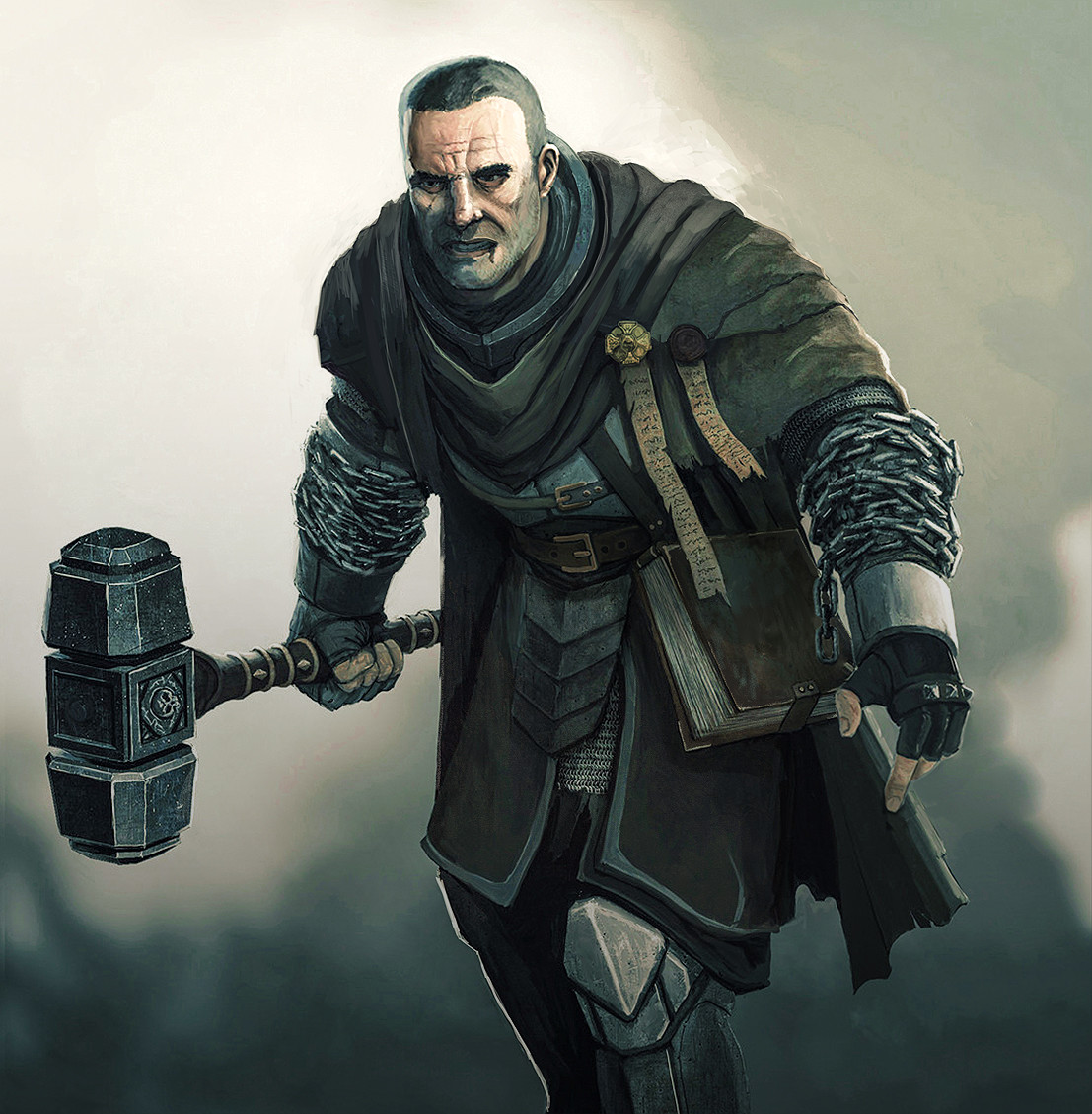
Credit, Thomas Woods

Zealot

Starting Equipment: medium weapon, torch, holy symbol (wood), vial of holy water.

A: Rage; Conviction
B: Feel No Pain
C: Iron Will; Zealous Accusation
D: Martyr

You gain +1 to Saves vs mind-altering effects and/or fear for every Zealot template you possess.

Rage
You can choose to enter a rage at the start of your turn, or in response to taking damage. While in a rage, you have +1 Attack stat and all your melee attacks inflict +1 damage. You might froth, or stare in battle-focus, or merely let a facade drop and give in to your ancient urges, brutal warrior training, or religious fanaticism.

While raging, you cannot do anything defensive, curative, or tactical with your allies. All you can do is attempt to kill things. Spellcasting is not impossible, but all your spells must be damaging spells, which deal +2 damage (if single target) or +1 damage (if multiple targets). Mishaps and Dooms may be more severe. While raging, you cannot stop fighting until you kill, subdue, or drive off all enemies. You can will yourself to stop raging with a 2-in-6 chance of success at the start of your turn as a free action. If one of your allies has injured you this fight, they count as an enemy.

Conviction
Choose an ideal linked to your faith when you gain this skill. Not something as broad as one of the seven virtues, but a goal that your faith compels you to meet - destroy witches, purge the undead, restore lost shrines etc. This is the reason for your zealous faith and cannot be changed. Once per day you may take 2 Boons on a roll made in relation to your Conviction.

Feel No Pain
You may negate all incoming damage from an attack as a free action. Keep a record of the damage you would have taken. At the end of combat, Save. If you fail then you immediately suffer that much damage. You can do this a number of times per day equal to the number of Zealot templates you have.

Iron Will
Your rage becomes focused and cold. You are able to think tactically while using the Rage ability and need not devote all of your actions to attempting to harm your enemies. You may end your rage on a 4-in-6 instead of 2-in-6.

Alternatively, you may use this power to automatically resist a non-damaging mental or magical effect as a free action. If you do so, you lose the rage ability benefit of this power until you have rested for the night.

Zealous Accusation
As a free action, you spit a litany of hatred at a target, detailing their spiritual, physical and mental shortcomings in excruciating detail and condemning them as an affront to the Divine who opposes His rightful servant and will be subject to your punishment. The target must Save (with the PC's CHA modifier applied as a penalty) or flee in shame. This Save is made with 1 Bane if the target is at least moderately religious or a member of a heterodox faith, and with 1 Boon if they are of an entirely different faith or not religious at all. This only affects targets that can understand you and would reasonably take offence.

Martyr
Once per day you may ignore Fatal Wounds for 1d6+1 Rounds. You may give in at any time before you reach the maximum rounds rolled. Once this time is up you suffer additional Fatal Wounds equal to the amount of Rounds spent acting. If you die tales will form around the story of your death, even if you died far from civilisation and no-one lived to carry your story back.
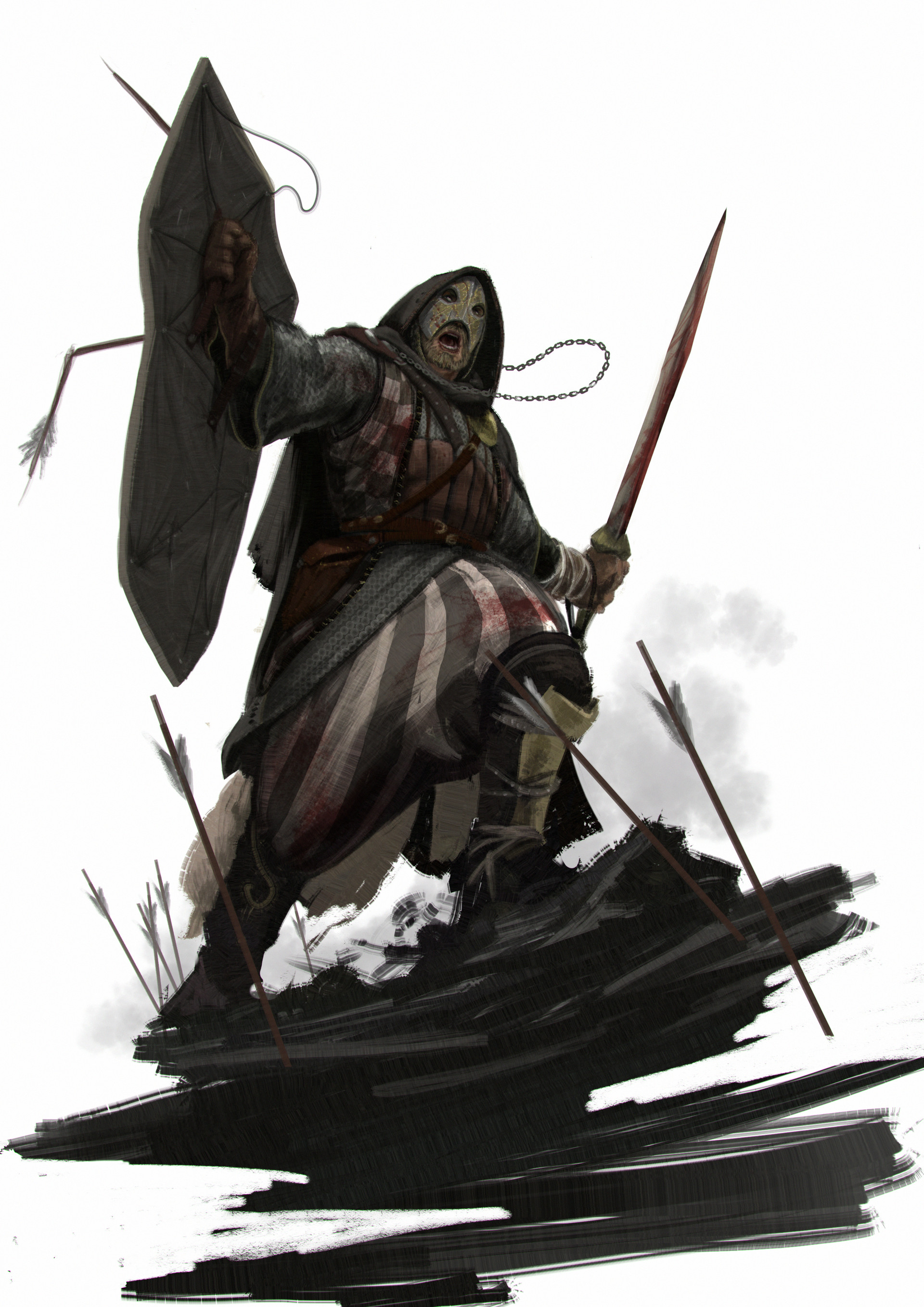
Credit, Mirko Failoni


Backgrounds

Roll and gain the following background, then roll on the results underneath. Asterisks indicate that you are literate:

1. Clergy; 2. Foreigner; 3. Soldier; 4. Unusual

1.* Clergy
1. You entered cloistered life thinking that you would find peace in prayer and the adoration of the Divine. Instead you found boredom, irritability and a nagging urgency. Start with the 'Religion' skill, a tattered habit and a holy text.
2. Your zeal was noticed in hidden corners of the Church and you were offered a role in enforcing the will at the tip of a sword. Start with light armour, 3 days-worth of rations and a cipher ring that allows you to decode secret orders.
3. You trained to become a priest but grew to despise the opulence and grandeur of the Church. You've since embraced the mendicant lifestyle as an errant preacher, wandering in search of your goal. Start with the 'Vagabond' skill, a heavy cloak and 3 days-worth of rations.
4. As a rabble-rouser and witch-taker you operated on the periphery of the Church, but you knew your cause was just. Start with the 'Torture' skill, a 50' chain, and 3 flasks of oil.
5. Even among hardliners your beliefs were regarded as extreme. Gradually the more orthodox of your peers pushed you out. Start with a borderline heretical holy text and gain +2 to all Saves vs fear.
6. You spent days fasting and meditating at a time and had a vision of a Divine angel, who showed you the true path and marked your soul. This actually happened. You gain 1 Boon on all rolls to endure lack of food, water and sleep, and your soul-ward grants you 1 Boon to resist the powers of non-Divine Outsiders (non-angels/daemons, this doesn't apply to their regular physical attacks but does apply to magical abilities they possess).

2. Foreigner
1.* Your god(s) are strange and alien to the people of this land but their song thrums in your blood and you chant their Divine words as you smite their heathen foes. Start with the 'Singing' skill, a chime and a book of holy hymns in your native tongue.
2. Unlike the dreary, dour churches of the local faith, your order gives praise to your god(s) in wild, ecstatic dances. Your form is a blur both in worship and on the battlefield as you cut your enemies to ribbons with wild abandon. You start with the 'Dancing' skill, loose silk robes (10gp) and make all Combat Manoeuvres with 1 Boon.
3.* An old schism rent the Church in its early days, and your people worship on the other side of that divide. Your religious practices are like the local ones but pitched through a warped mirror. Start with an inverted holy symbol, a holy text in a foreign liturgy, a vial of holy water, and the ability to shock a local priest into speechlessness through the mere existence of your heresy.
4. Your sect was small, but feared by locals and invaders alike. Blades in the night, poison in wine, a silk cord from above, all of these and more were your weapons in your Divine struggle. Start with the 'Murder' skill, a garrote, and 3 doses of somniferum.
5. You hail from hard, cold lands and serve a grim god. You do not know why you have been dispatched to this land of weaklings, only that you must go. Start with winter clothing and 50' of rope. You take 1 Boon on all foraging attempts.
6. Your people worship the elemental spirits that permeate and exist within all things, not the crude godhead of the local lands. Start with the 'Forestry' skill, a bow and a quiver of 20 arrows. You gain 1 Boon when communicating with spirits of nature.

3. Soldier
1. You believed for a time that serving in the army would be the best way to further your convictions, but you were mistaken. All you found on the front lines was pointless blood and slaughter. Start with the 'Tactics' skill, medium armour and an Interesting Scar.
2. You led services before battles, whipping your audience into a murderous frenzy before leading the charge yourself. Start with the 'Demagogue' skill and replace your Medium weapon with a Great weapon.
3. You give glory to the Divine through combat. In your mind, they care not from where the blood flows, only that it flows. Start with an Interesting Scar, medium armour, and a shield.
4. As a man-at-arms in service to the Church you were not well versed in theology and religion, but your violence in the Divine's name was rewarded. Start with light armour and 2gp.
5. You died on the battlefield, bleeding out from a horrendous gut wound. The Divine blessed you as your sight faded and you awoke hours later, somehow alive in a field of corpses. Start with light armour and a holy symbol (wood). You remove a Fatal Wound on 2-in-6 instead of 1-in-6.
6. You protected pilgrims and travellers on their journeys to holy sites before your order was forcibly dissolved. Start with medium armour and a warhorse (with saddlebags).

4. Unusual
Discuss your background with the GM depending on the option you roll below:

1. You serve the mightiest god, who is destined to consume all other gods. Start with an extra 3 days-worth of rations. If you consume an item of religious significance to another faith you can add 1 Boon to a subsequent roll of your choosing. You can only have 1 Boon stored at once.
2.* There are other powers worthy of your attention besides the gods. They respect your ambition and grant you strength. Start with the 'Occult' skill, a piece of chalk and 5 candles. You know the infernal tongue of daemons and devils.
3. During the looting after a siege, you witnessed your comrades set a church alight after plundering it. Seized by an unknown force, you plunged into the flames and emerged largely unharmed from the burning building with an ashen relic held in your grasp. Start with the 'Arson' skill, a holy relic (20gp to the right buyer) and medium armour.
4.* The undead are an affront to the Divine and must be purged wherever they are found. The last of an order of hunters trained you in their ways before they passed. Start with the 'Undead' skill and a silver holy symbol. You know when an undead creature is less than 100' away, but not the specific direction.
5.* Your sect of witch-takers were dissolved after it was learned that you had taken to emulating the practices of those you hunted, the better to fight them. Start with 1 Magic Dice and a spellbook containing a randomly rolled spell. You can tell if an item is magical or not in the same way as a wizard.
6. The Fey are a force of insidious corruption and chaos that lurk in the midst of civilised lands. You are intimately familiar with them and know their evil. Start with the 'Fey' skill and a silver & rowan circlet. You can speak the Elvish language and can recognise the creations of the Fey.

Saturday, 23 June 2018

Pike & Shotte: The War, Part 2

So, the War. My previous post contained possible causes and scenarios for the War itself. This post will get into the nitty-gritty of creating the armies.

This post contains precious little in terms of historical accuracy and instead focuses on implementing a set of easy-to-follow guidelines to create a warzone that your PCs can frolic, adventure and be horribly killed in. It originally contained a number of sections, but I've limited it to Armies & Battles due to the length it was reaching. Be warned that this post is incomplete and will contain references to things that have been left to later posts.

I'll be making subsequent posts on:
  1. Creating the Map
  2. Battles & Sieges
  3. Campaign Event Cycle & Timeline
As in my previous post, this assumes an Early Modern style of warfare, but can be easily tweaked.

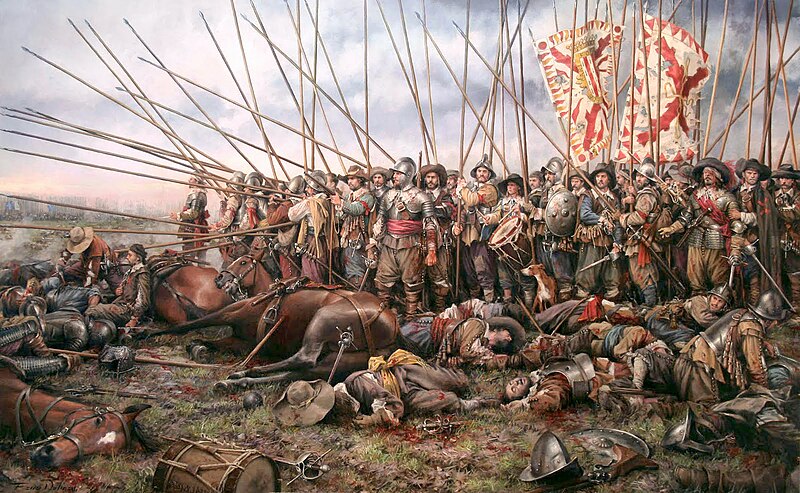
'Rocroi, el Ășltimo tercio', by Augusto Ferrer-Dalmau

There will be at least two armies in any region of Pike & Shotte. Armies may be created, altered or destroyed by events in a campaign. I classify armies as any armed group with more than 500 members, and an organised command structure. Smaller groups represent noble retinues, bandit gangs or smaller mercenary bands that, while potentially violent and aggressive, don't have the same power to disrupt a region like a true army does. However, larger armies may split off into smaller groups as part of their campaigning.

Armies have the following features:

General Characteristics
1. Health: An abstraction of the number of soldiers and units in an army. Higher current health means more units are at full-strength, lower health means many units need reinforcement. Maximum health refers to the overall size of the army.
2. Leadership: The ability of officers and generals to meaningfully plan and command the army.
3. Morale: The will and confidence of an army's soldiers. This tends towards a median over time.
*4. Mobility: How quickly the army is able to move on the campaign map, and how good they are at running down fleeing enemies in a rout. The higher the proportion of cavalry in an army, the higher this is. Artillery always reduces it, and larger armies are always slower.
5. Supplies: How well provisioned the army is. Each army must have adequate supplies for their troops or suffer Morale & Health penalties.
6. Cost: Soldiers don't fight for free. This is the monthly cost in gold pieces (not silver) of fielding the army.

Combat Characteristics
1. Skirmish: How good the army is at irregular warfare and harassment. Roughly reflects the proportion of light cavalry and skirmishers in the army.
2. Shock: The army's ability to deal and absorb heavy punishment in battle. Roughly proportional to the amount of line/heavy infantry, heavy cavalry and artillery in the army.
3. Siege: The army's effectiveness in besieging settlements and fortifications. Large amounts of artillery and infantry will increase this.
*4. Mobility: How quickly the army is able to move on the campaign map, and how good they are at running down fleeing enemies in a rout. The higher the proportion of cavalry in an army, the higher this is. Artillery always reduces it.

Creating an Army

Stats
Leadership, Morale and Mobility start at 10. Health, Supplies, Cost, Skirmish, Shock, Siege & Mobility start at 0.

Commander
Roll a statline for the Commander of the army using your system of choice and note their modifiers. Add the average of their Intelligence & Wisdom modifiers to the army's Leadership and their Charisma modifier to the army's morale.

Roll 1d4 + their Charisma modifier to find their Renown - this is their legacy of past actions that has built up as part of their reputation. Winning battles increases it, and losing battles reduces it.

Roll below to find the Commander's speciality and note the bonus, applying it to the army's stats if appropriate:
1. Dogged Attacker: +2 Shock
2. Dreaded Foe: -2 Enemy Morale
3. Military Mind: +2 Leadership
4. Lightning Fast: +2 Mobility
5. Inspiring Presence: +2 Friendly Morale
6. Bane of Cities: +2 Siege
7. Raider: +2 Skirmish
8. Scorched Earth: the Commander's army gains 1 Boon on the results of all foraging actions.
9. Zealous: the Commander's army gains +4 Morale when fighting opponents of a different religion.
10. Reaper: the Commander's army may re-roll their Shock roll during a battle, but must keep the second result.
11. Greedy: the Commander's army gains 1 Boon when rolling to check the outcome of looting a settlement.
12. Cautious: the Commander's army will notice an ambushing foe on a 3-in-6 instead of a 1-in-6.

Give them a name, allegiance and a general description, and maybe some noted past battles. You may end up with Hannibal Barca or Eugene of Savoy, or you might get Quinctilius Varus or the Earl of Cardigan, but don't worry too much either way: incompetent commanders can produce equally interesting results compared to their betters.

Initial Funds
Roll 3d6 x 1000gp to find the army's starting funds.

Initial Objective
Roll below to find the army's initial objective:

The commander wants to...
1. Fortify...
2. Raid...
3. Destroy...
4. Reinforce...
5. Besiege...
6. Reach...

1. A major settlement (roll randomly).
2. A minor settlement (roll randomly).
3. A strategic location (bridge, pass, junction, fortification etc., roll randomly).
4. An enemy army (roll randomly).
5. A specific region (roll randomly).
6. A friendly army (roll randomly).

Some of these results may not make sense, like destroying a friendly army, but my reasoning is that even armies that are nominally on the same side are still divided by factionalism and infighting. Or maybe the objective comes about as a result of shifting orders and allegiances.

Recruitment
Using the tables below, spend the initial funds rolled above on recruiting soldiers and specialists. Soldiers are a broad class of fighters who perform the general parry-and-thrust dirty work on the battlefield, while specialists posses special powers or abilities that can influence an army in battle or on campaign. Specialists do not count towards the army's Health, nor do they have a supply cost:


SoldiersCombat StatsCost (GP)Supply Cost
Light Infantry (e.g. Jaegers, Irregulars)+2 Skirmish, +1 Shock, +1 Mobility5001
Heavy Infantry (e.g. Tercios, Caroleans)+3 Shock, -2 Mobility1,0002
Light Cavalry (e.g. Dragoons, Hakkapeliittas)+3 Skirmish, +2 Shock, +3 Mobility1,5003
Heavy Cavalry (e.g. Gendarmes, Winged Hussars)+4 Shock, +2 Mobility2,0004
Light Artillery (e.g. Falconets, Sakers)+1 Skirmish, +1 Siege, -1 Mobility7503
Heavy Artillery (e.g. Culverins, Full Cannons)+2 Skirmish, +2 Siege, -2 Mobility1,5004
Siege Artillery (e.g. Basilisks, Howitzers)+5 Siege, -2 Mobility1,5003


SpecialistsEffectCost (GP)
ChirurgeonsReduces Army Health loss due to disease or battle damage1,500
Line Officers+2 Leadership, multiples don't stack2,000
Master Smiths+1 Shock for all Soldiers3,000
PioneersArmy movement speed suffers only 50% of the normal terrain penalties1,000
SappersThe Commander may attempt to tunnel into or out of a besieged settlement, allowing them to make a single Shock roll against an opponent in a siege2,000
Skilled QuartermasterSupply Cost of all Soldiers reduced by 1 (to minimum of 1), multiples don't stack2,000
Standard Bearers+1 Army Morale, multiples don't stack800
War Wizards+4 Shock, -2 to enemy Morale3,000


Renown
A commander's Renown allows them to choose a number of entries from the following table. Commanders can choose any number of entries provided that the cost of them does not exceed their current total Renown. If a commander's Renown decreases for whatever reason they must immediately remove entries until they have reached their new cap. An increase in Renown allows a commander to choose extra entries in the post-battle phase. Each entry can only be taken once, unless explicitly noted.


AssetDescriptionEffectRenown Cost
Venerable ChroniclerA scholar and diarist who records the Commander's great deeds.If the Commander defeats an enemy who had previously defeated them, they gain +1 Renown1
Crazed ApothecaryNeurotic and erratic, but their brews are potent.Roll 1d4 before a battle: 1: +2 Skirmish, 2: +2 Shock, 3: +2 Mobility, 4: +2 Morale. 50% chance of dealing 1d4 damage to Commander's Army1
Battlefield ReliquaryThe remains of a saint or holy artefact, borne aloft by the devoted.+4 Morale2
Herald of ArmsA messenger who proclaims the Commander's authority.The Commander gains 1 Boon on all rolls when negotiating with settlements or parleying2
Embedded AssassinsMasked killers wielding mighty weapons who fight in silence.+3 Skirmish, -1 enemy Morale3
VarangiansBarbaric foreign fighters, eager for gold and glory.+3 Shock, +1 Mobility3
Great CaptainA pre-eminent military leader offers their advice to the Commander.+4 Leadership4
Horse LordsWild riders follow the Commander, spitting savage war cries.+4 Skirmish, +2 Mobility4
WallbreakerA mighty gun inscribed with arcane runes, attended to by wizard-engineers.+3 Skirmish, +8 Siege, -2 Mobility, 10% chance of misfiring (1d4 damage to Commander's army, no progress on Siege phase)5
Fey AlliesCapricious sylvans lead a Wild Hunt from deer-back with blades of bronze and bone.+5 Skirmish, +3 Mobility, -2 enemy Morale, -1 friendly Morale5
Magical BeastsStrange and savage products of arcane crossbreeding. Handled with great care.+4 Shock, -2 enemy Morale, 25% chance of dealing 2d6 damage to Commander's Army6
ArchmageA master of the arcane arts, and a source of great disquiet to enemies.+6 Shock, -2 enemy Morale. 25% chance of a devastating magical mishap (treat as doubling the enemy's strength in the current phase)6

Health
With the army's recruitment completed, calculate its Health by totalling up Hit Dice according to its composition. Roll for each unit accordingly:

Light Infantry: d6
Heavy Infantry: d8
Light Cavalry: d4
Heavy Cavalry: d6

Artillery does not contribute to the army's overall Health.

Thus an army with 2 units of Light Infantry, 3 units of Heavy Infantry, a unit of Light Cavalry and a unit of Heavy Cavalry would roll 2d6+3d8+1d4+1d6, getting a total of 28 Health.

Supplies
Roll 2d10+5 to determine the army's starting supplies.


Please note that this is still being tweaked and that the above tables are not exhaustive - I definitely plan to flesh out the Specialist and Renown tables further. Any comments, constructive criticism and suggestions are welcome. Posts on how to actually use the armies will be forthcoming.

Wednesday, 6 June 2018

OSR Class: Reiver

"Harrow! Harrow! To all true-blooded men and women I call ye to trod against the cowards of Clan Dremond, who stole away with mine two nights ago! Harrow! Harrow!" - 'Black' Tom Maughan, Marcher Reiver.

I'll upload more about the War soon, I promise.

Fighters are combat experts who excel at engaging and destroying multiple targets. Wizards have a variety of magical powers at their fingertips. A Sawbones can patch you up in an instant. A Thief can sneak and steal like no other. Reivers are dirty fighters who focus on getting in and out quickly, sowing chaos as they go, while knowing the lay of the land and being able to sneak around to find the best loot.

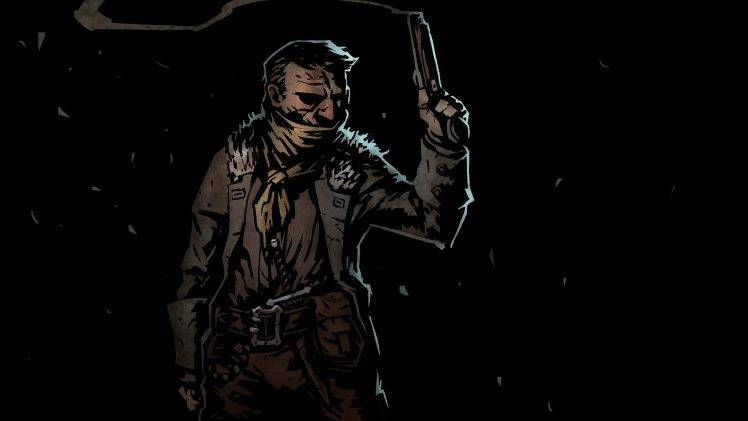
Darkest Dungeon, Highwayman

Reiver

Starting Equipment: light armour, dagger, pistol, 12 Apostles.

A: Slewe Dogge; Plunder.
B: Arsonist; Hot Trod.
C: Opportunist.
D: Harrow.

You gain +1 Stealth and +1 to Saves vs exposure and inclement weather for each Reiver template you possess.

Slewe Dogge
You may mark a target within your line of sight. You can track them across virtually any terrain provided that they are no more than three days ahead of you. If they are more than three days ahead then you must make an INT check. If they are more than a week ahead, or poor weather affects their tracks, you must roll INT/2.

Plunder
You may ignore a point of Encumbrance inflicted by an item worth over 200sp. This applies to containers holding valuables, i.e. a chest or sack filled with coin, as well as single items, i.e. a golden idol.

Arsonist
You know fire. You take 1 Boon on attacks made with burning oil flasks, molotov cocktails, firebombs or any other fire-based attacks. Gunpowder weapons and explosives don't count, but hurling a burning branch does.

Hot Trod
Once per day you may remove 1d4 levels of Fatigue from either yourself or your mount.

Opportunist
Whenever you get a situational bonus to an attack roll (surprise, elevation, etc.) you deal an additional +1d6 Damage.

Harrow
Announce a raid against a target no more than a week's travel away to a motley audience of thieves, ruffians and thugs, and roll vs your CHA. If you pass, 2d6 + your CHA modifer of them will join you on your raid. If you fail only 1d6 + your CHA modifier will join. All participants will expect a share of the plunder and will not hesitate to stick you in the ribs if you try and short them, otherwise they'll be reliable in a fight and excellent drinking company. This ability can't be used to lure hirelings to a dungeon - they're in it as much to steal from and cause havoc for a living target as they are for the loot, dungeons just don't have the same appeal as riding through a settlement flinging burning brands.

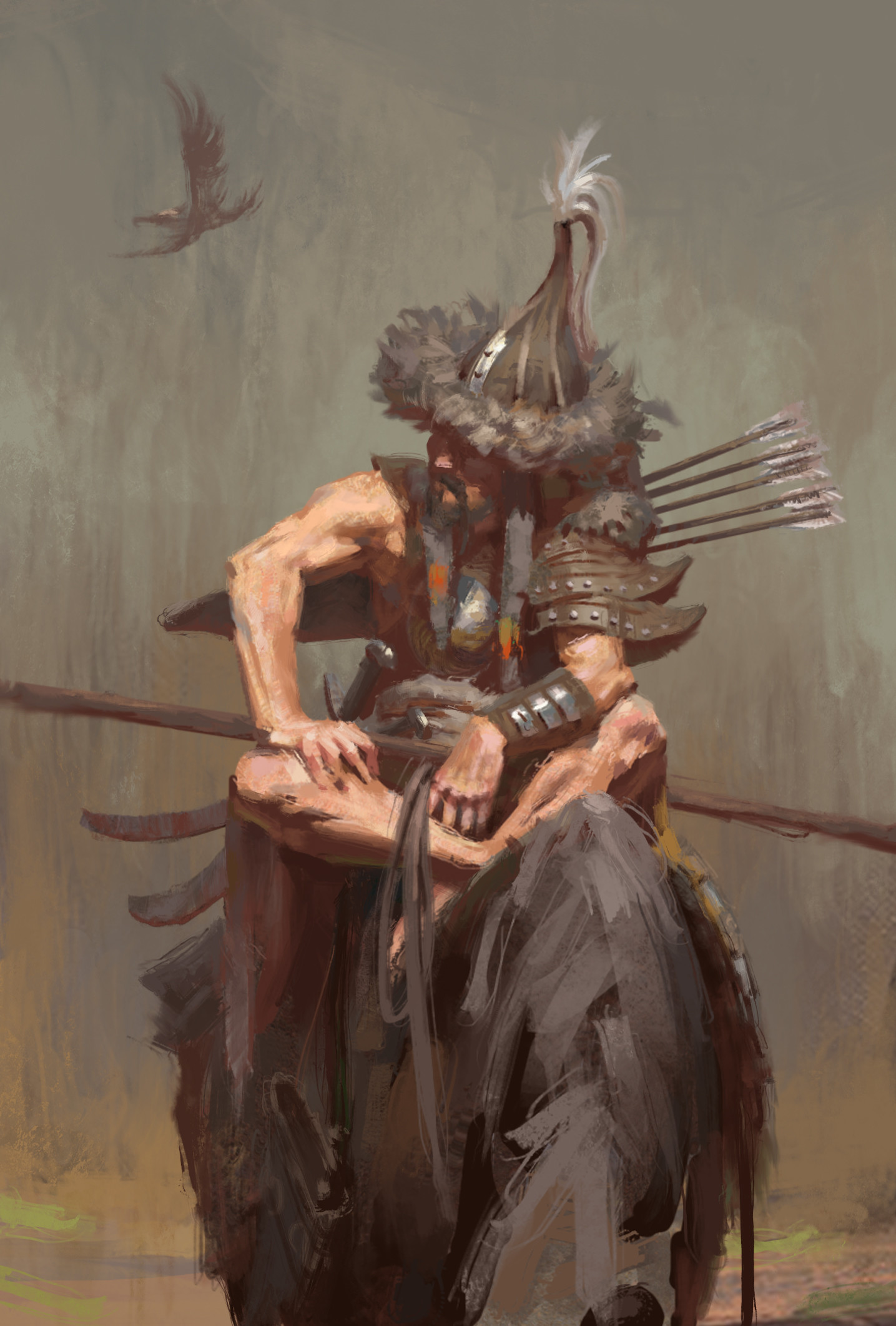
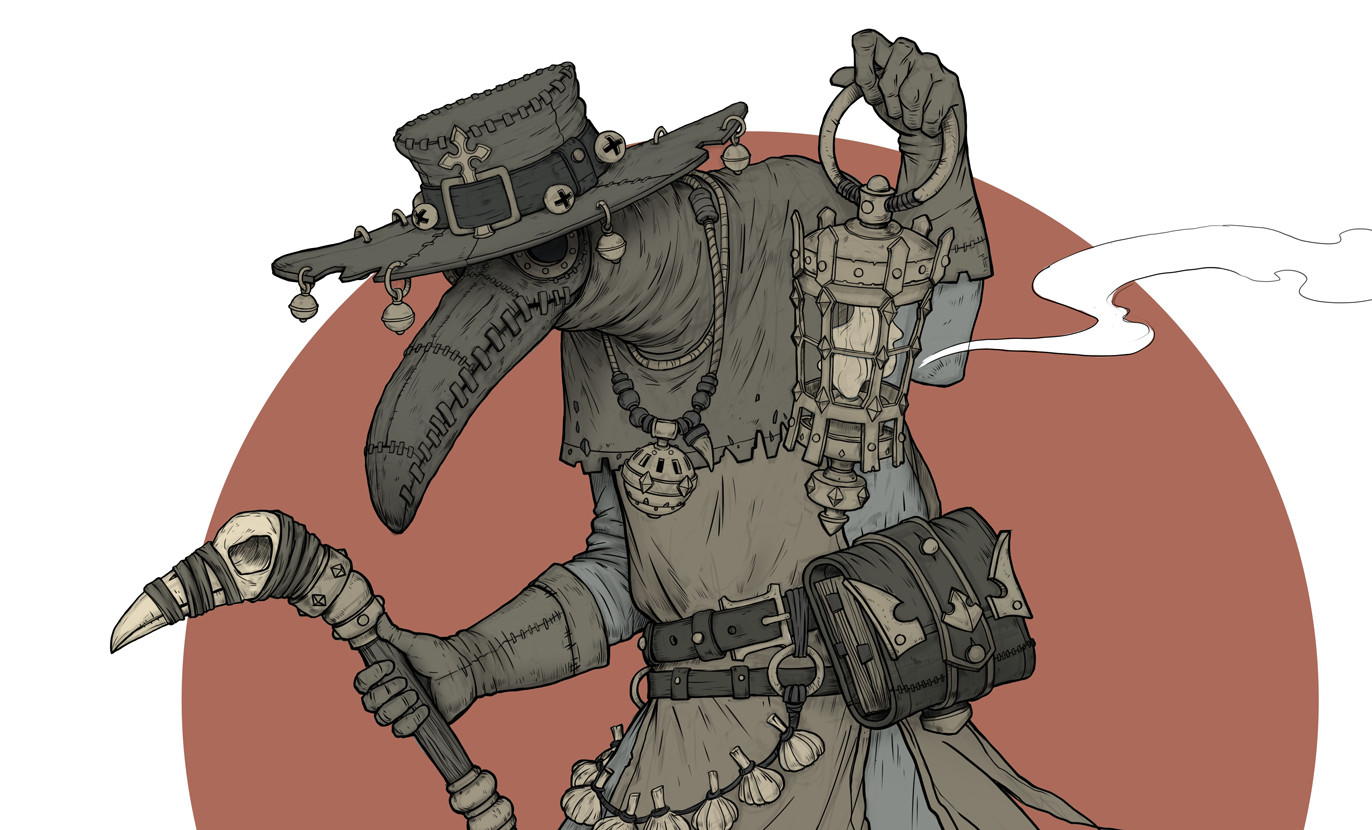
Credit, Da Yu


Backgrounds

Roll and gain the following background, then roll on the results underneath. Asterisks indicate that you are literate:

1. Criminal; 2. Foreigner; 3. Frontier; 4. Soldier; 5. Unusual

1. Criminal
1.* You know how to get into hard-to-reach places quickly and quietly. Start with 50' of rope, a grappling hook and a detailed map of a nearby fortified location.
2. You held up travellers and carriages on country roads, demanding their money or their lives. Start with the 'Banditry' skill, a sturdy riding horse (with saddlebags) and 2d12sp in ill-gotten gains.
3. Turf wars were serious business, and sometimes risking the death penalty for arson was worth the chance to put an enemy out of business entirely. Start with the 'Law' skill and 3 flasks of oil.
4. You rustled cattle and horses, risking the hangman's noose with each outing. Start with the 'Husbandry' skill, 50' of rope and a riding horse. You can tell the value and breeding of a horse by sight.
5. Sometimes the best ways into an rival's turf lie underground, even if they smell terrible. Start with a vial of antitoxin, some heavily soiled clothes and take 1 Boon to Saves vs Disease.
6. You lead a band of vicious cutthroats in raids on villages and farms, sowing chaos in your wake. The War put a stop to your activities after your band was dispersed by force. Start with the 'Banditry' skill, a tent and a riding horse (with saddlebags).

2. Foreigner
1. You raided and plundered from overseas, arriving by ship at dusk and leaving before sunrise. Replace your starting equipment with Medium Armour and a medium weapon of your choice. Start with the 'Sailing' skill. You can see up to 30' away in unlit conditions.
2. Your people lived on horseback, roaming the steppe and raiding their neighbours with impunity. Replace your pistol & Apostles with a bow and a quiver of 20 arrows. Start with the 'Husbandry' skill, a hardy steppe horse (with saddlebags) and take 1 Boon when foraging for supplies. You can shoot a bow from horseback without penalty.
3. You hail from a desert land where the only permanent settlements exist in lush fortified valleys and mountain passes. Start with the 'Vagabond' skill and a peculiar mount (with saddlebags or equivalent). Replace your starting equipment with loose clothing instead of light armour, and a medium weapon of your choice instead of a pistol & Apostles. You can always find water if any is present within 5 miles when travelling overland and you make all Saves to resist the effects of heat with 2 Boons if you are not wearing armour.
4. Life in your homeland was rudely interrupted by strange people wielding mysterious weapons that roared with the power of the gods and riding beasts that towered over the height of a man. Their settlements began to take root, but proved to be easy picking for you and your fellows. Maybe the home of these people holds more riches? Start with clothing that instantly marks you out as a foreigner and a matchlock arquebus (with 10m of matchcord). If you can see the sky you have a 4-in-6 chance to determine cardinal north.
5. Your people were always engaged in low-level, endemic warfare to procure captives for divine sacrifices. Start with the 'Religion' skill, a polished skull and an Interesting Scar.
6.* You hunted outlaws, criminals and other fugitives from justice in your homeland. Maybe you were one once. You bear a visible tattoo, scar or brand as a mark of your profession. You start with the 'Law' skill, a set of manacles and a target who you have been hunting for a long time.

3. Frontier
1. Stealing, robbing and killing was a way of life out in the Marches. You were very good at it. Start with the 'Banditry' skill and 1gp.
2. The mountains breed hardy folk, and your clan was no exception. The little grazing land that existed was fiercely fought over and you can fight better than anyone on a rock face or scree slope. Start with the 'Mountaineer' skill, 10 iron spikes (1 inventory slot) an ice axe (light weapon) and winter clothing. You ignore the Movement penalty for mountainous terrain.
3. Not all Reivers got their start as criminals and thugs - you were hired as a guide through the heath and moor. You start with the 'Geography' skill, 3 days-worth of extra rations and take 1 Boon when foraging for supplies.
4.* Raiding enemies on either side of the borderlands was a well-defined process in Marcher Law. You specialised in leading reprisal raids to avenge your family's honour. Start with the 'Law' skill, a lance with a singed lump of peat affixed to the point and an extremely loud holler.
5. A head of cattle could buy an awful lot out in the borderlands. So what if some occasionally went missing from the local farmers? They always seemed to have more. Start with a riding horse (with saddlebags), 50' of rope and 3 days-worth of beef jerky. Your Stealth score is not affected while riding a horse at night time.
6. The fens and wetlands were your home and the swamps provided most of what you needed, the inhabitants of the bordering regions supplied the rest. Start with the 'Fishing' skill, a net and a fishing line. Replace your pistol and Apostles with a trident (medium weapon).

4. Soldier
1. You specialised in scaling walls and infiltrating fortifications and settlements unnoticed to cause havoc from within. Start with the 'Siege' skill, a grappling hook and 50' of rope. You know how to throw a grappling hook to make virtually no noise.
2. You were pressed into service and rode with a troop of light cavalry, specialising in chevauchee scorched earth tactics. Start with an extra 1d6gp, a warhorse (with saddlebags) and a goat.
3. You may not have liked being a sailor, but your skill with a blade and affinity with fire served you well in ship-to-ship combat. Start with the 'Sailing' skill and replace your dagger with a medium weapon of your choice.
4. You didn't fight, but you followed the army and stripped the battlefields bare after the fighting was over. Start with the 'Scavenge' skill and 1d6 trinkets worth 1d20sp each. There is a 1-in-10 chance that someone recognises the trinket you're selling.
5. While your comrades sought their thrill in the chaos and bloodshed of the battlefield, you always preferred the sack and pillage. Especially when flames were involved. Start with 3 flasks of oil (1 inventory slot), 1d3gp and an Interesting Scar.
6. While looting and pillaging after the battle was all well and good, you much preferred fleecing your fellows of their hard earned lucre at dice. Start with the 'Gambling' skill, a set of dice and 1d8gp.

5. Unusual
Discuss your background with the GM depending on the option you roll below:

1. You were hired to track and help capture strange beasts for private collectors or bored lords who wanted some more unusual sport. You specialised in hunting: 1. Humanoids; 2. Reptiles; 3. Avians; 4. Insectoids. You have a 2-in-6 chance of knowing the weakness of a target if they match this type. Start with a weighted net and 50' of rope.
2. You do not ride horses. Why ride when your own legs can carry you far and wide? You don't need to wear shoes and can run at a steady pace for 8 hours, provided you are not encumbered, after which you must rest.
3.* Your order specialises in hunting rogue wizards and sorcerers and destroying their lairs. Start play with a holy symbol and a magic scroll of a random defensive spell. Your body is covered from neck to ankle in intricate, silvered arcane tattoos and you make all Saves vs magic with 1 Boon. If a significant portion of your body is scarred or the tattoos are otherwise damaged you lose this bonus until you can source the expensive ingredients needed to mix into the ink and a tattooist from your order.
4.* You were a feared raider and brigand, until you went to sack a remote monastery. No-one knows what the monks said to you but you turned on your comrades and slew them before donning a monk's habit yourself. Start with the 'Religion' skill, a holy symbol and 3 vials of holy water (1 inventory slot). You take +1 to Saves vs Fear.
5. You were abandoned as a child and raised by wild animals. You learned how to survive in the wild and help yourself to other peoples' belongings, but eventually your curiosity got the better of you and now you live among them, or attempt to. Start with the 'Scavenge' skill and replace your equipment with fur clothing and a medium weapon of your choice. You take 1 Bane on all social interactions with other civilised peoples, but take 2 Boons when determining the reaction of wild animals.
6. Your skills were as much use below ground as above it. You saw some horrors down in the caves. Start with the 'Spelunking' skill and 50' of rope. You always know if a tunnel is leading you upwards or downwards and take +1 to Saves vs Fear.

Saturday, 2 June 2018

OSR: Cosmology & Deep Time

The Deep Time machine keeps on going. Things seem to be moving on to how Deep Time could be used to create worlds with bizarre layouts, as opposed to the regular geological layers in a sphere. Skerples has posted about spiral worlds, where travelling downstream brings you to past epochs and an upstream passage has yet to be discovered (or maybe a cold, icy future is what awaits), which I found to be a very interesting take.

This got me thinking about how Deep Time could be integrated into a setting's cosmology, and how this could affect the shape and layout of the material world. One thing that immediately popped into my head was Yggdrasil in Norse mythology - the enormous tree that connects the nine realms of gods and mortals.

Etrian Odyssey V: Beyond the Myth

Premise

In the beginning the Authority created the First World, forming it from the raw stuff of chaos that roiled and churned in the void. It created and hung the burning sun in the day sky and the moon and stars in the night and sculpted the land and seas in the ways that pleased It, and the First World was good and beautiful. But the Authority was unsatisfied with Its creation for nothing lived and moved below it, and it created plants and animals the likes of which mortals have never seen. The Authority was pleased and It made and planted the Tree of Eternities and made Its throne atop the highest reaches, whereby It could survey Its kingdom. And it was good.

The Tree of Eternities grew beyond all other plants and creatures and the Authority could see all of Its creations in all their wonder. But the Authority had made the Tree of Eternities from Its own power and its branches breached the firmament even as its roots pierced the floor of the First World and entered the void. Thus was chaos and magic unleashed upon the First World, destroying all that the Authority had made good. The Authority left the First World and created Heaven, whereby it could better view all of creation, and created the Second World from the Tree of Eternities and Hell from its roots.

I've thought up a few possibilities as to how this could play out.

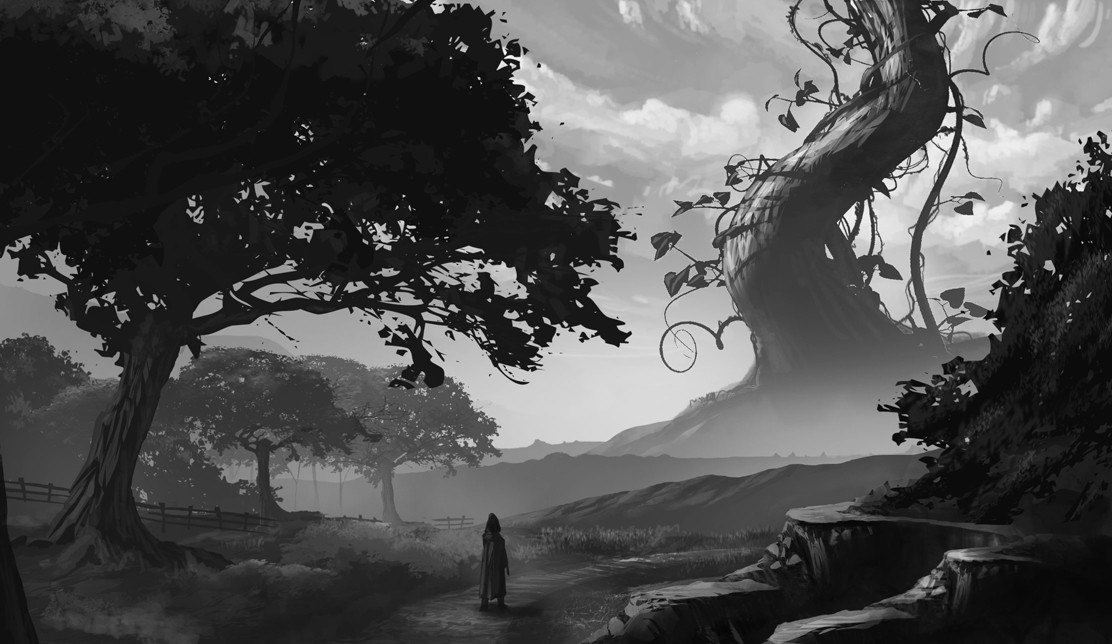
Credit, Vincent Presseau

Necklace Worlds

The Tree of Eternities grows upwards like a regular tree. The Authority creates a new world around the upper trunk of the tree. The icy north & south poles of the world abruptly give way to lush greenery and warmth, and an enormous knotted trunk emerges from the ground and stretches into the sky. It can't be seen from far away because the Authority keeps it hidden, but astronomers note the regular and uniform spacing of the planets that they can see through their telescopes. Travellers can ascend up and down the trunk to reach past or future worlds, or Heaven and Hell if they travel far enough. The various worlds are strung together like beads on a necklace of vines. You could travel from one world to another with a spaceship quite easily. Offshoot growths of the Tree of Eternity can provide smaller routes of access to the main trunk.

Matryoshka-Doll Worlds

The Tree of Eternities continues to grow and the Authority creates new worlds inside it. As the tree grows more rings, more worlds are created on top of the last. The worlds are cylinders - one can travel the circumference without difficulty but the upper and lower ends gradually dissolve into oozing channels of divine xylem. As the Tree grows, its cambium produces a new layer that builds off the old, leading to a common history that runs through the many layers. With adequate equipment and preparations one can travel through the Tree's vascular system and be deposited on other worlds. The other way to do this is to dig deep enough or climb high enough to find the tough sapwood layers that separate the rings and break through to the next world (this has a high fatality rate due to sudden exposure to great heights or high-pressure magma). If one travels to the heartwood of the tree they have a direct route to the First World and Hell.

Dew-Drop Worlds

As the Tree of Eternities grows, its branches spread and the Authority creates new worlds from them, as drops of dew on a leaf. Each world exists in its own astral bubble, as if suspended in a crystal sphere. Some worlds are created in higher reaches than others and receive more light, and some are created near other things that live on the Tree, like parasites or astral lichen. The Authority moves and reorganises them as it sees fit, which often changes their conditions massively. Worlds on the same branch tend to be more similar than those on different branches. One can travel between worlds by breaching the surface of a celestial sphere and undertaking a long and hazardous journey on the surface of the Tree of Eternities, which still exists in the corrupted First World.

Fractal Worlds

The branches of the Tree of Eternity pierce the firmament at different angles as they grow towards the light of Heaven. As they grow and branch, the Authority creates new worlds upon them, and new worlds from these when they too branch. Each branch is associated with the end of an epoch, and the worlds created from the branch can diverge wildly. Most of the worlds look like shelf fungi growing out from the branches and vary wildly in overall shape. Their one common factor is that one of the cardinal directions inevitably ends in an enormous, curved wall of bark. Bold explorers can traverse the branches and find other worlds that mirror their own, or travel back to the main trunk and experience ancient epochs.

Coppice Worlds

The Tree of Eternities breaches the firmament and a new world is formed around it. However, the Authority, ever wary of further cosmological problems, regularly coppices the Tree back down to the level of the First World. This completely destroys the world currently built around the Tree, but broken traces of it remain in the lower reaches of the new world that is formed as the Tree rapidly regrows. The deeper one travels, the closer to the First World and Hell they get. Stories of judgement, wrath and revelation have a real chance of coming true if pruning time is getting close.

Thursday, 31 May 2018

OSR Class: Sawbones

"And always must you disdain and shun such disreputable knaves as gravediggers, tanners and the barber-surgeons..." - Morkan, Head Physician of the Corpus Collegium

I'm on a roll with the healer-type classes.

The Moderati flaunt their magical talents as they knit flesh and draw poison with a touch, physicians consult their tomes and watch the stars to source their cures, and priests pray for the sick amidst finery and wonder. You, on the other hand, know the honest trade of flesh, blood, and bone.

Barber-surgeons are what happens when an educated and wealthy elite don't want to get their hands dirty with actual medicine. They are medical jacks-of-all-trades, able to pull teeth, amputate limbs, draw blood, make 'medicines', cut hair and remove bladder stones. Sometimes the tender ministrations of a barber-surgeon can cause more trouble for their patient than the patient's ailments. They do not have the privilege of a university education, instead learning their trade as an apprentice.

Many cast off the lives they had in the cities and towns, or as itinerant surgeons wandering between villages, and found lucrative employment treating soldiers fighting in the War. While most barber-surgeons know little of violence besides the occasional brutality they visit out of necessity on their patients, this class represents a battlefield surgeon driven weary by the horrors they encounter - a Sawbones.

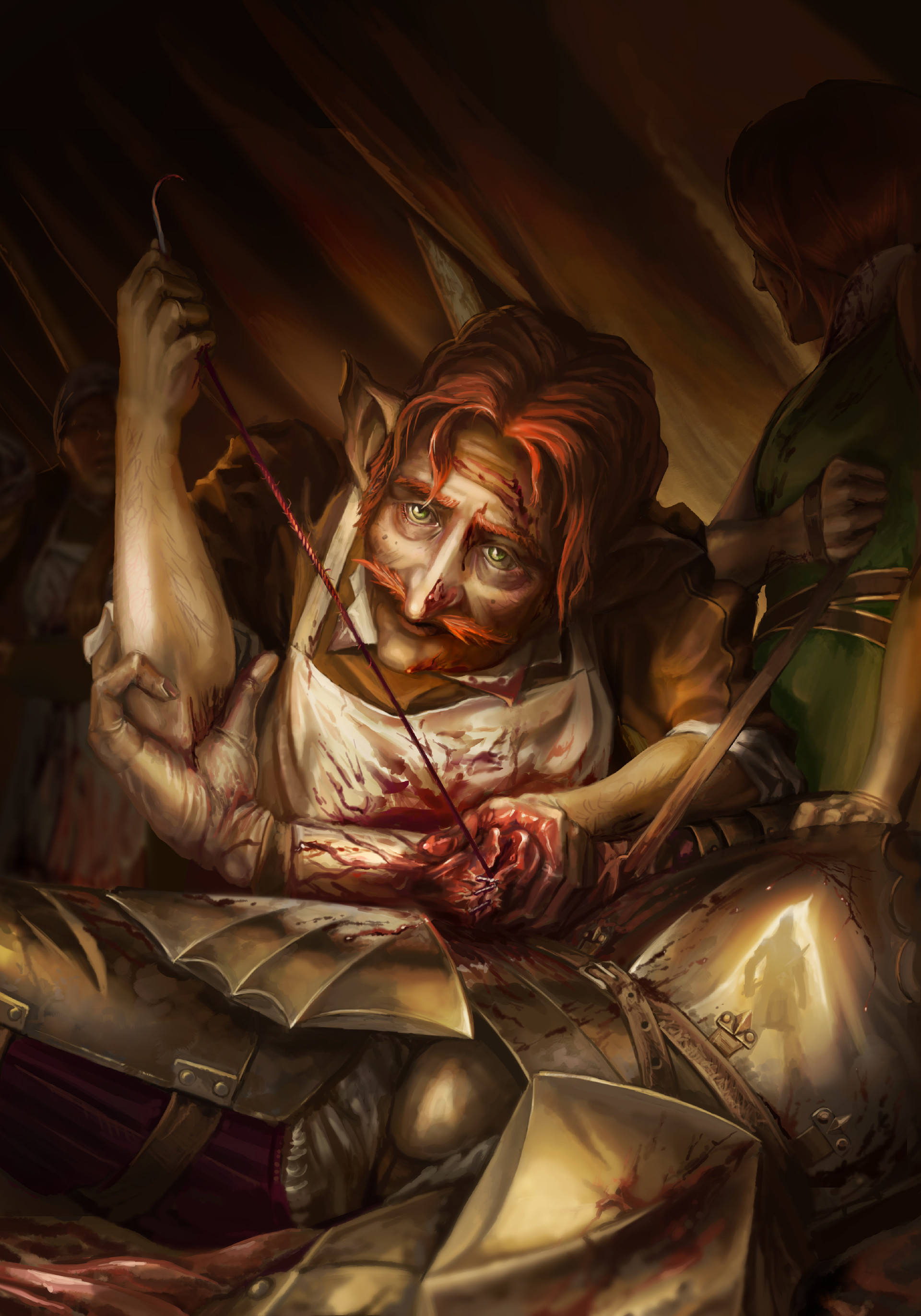
Credit, Jakub Dobi

Sawbones

Starting Equipment: dagger, medical supplies (3), leather apron, 1d6sp.

Medical supplies are used to fuel some of your abilities and represent assorted poultices, vials of alchemical ingredients, leeches, stitches, smelling salts and other tools of your trade. You can carry up to 3 in a single Inventory Slot and can purchase them for 1gp in any town or city. Villages may have them but they will be much more expensive.

A: Crude Poultice; Leech.
B: Find Vein; Vapours.
C: Stimulant.
D: Radical Treatment.

You gain +1 to Saves vs Fear and Disease for each Sawbones template you possess.

Crude Poultice
You fashion a quick and dirty salve for your target's wounds, healing them for 1d3+X HP, where X = the number of Sawbones templates you possess. This costs 1 use of medical supplies. If used to heal an injury, this ability reduces the injury length by (1d3 + X)/2 days.

Leech
You affix leeches to the target's flesh, purifying their blood. They may make a new Save vs all poisons, diseases or intoxicating effects with 1 Boon. This costs 1 use of medical supplies.

Find Vein
Once per day per level, you may rupture a major blood vessel on a successful attack with a bladed or piercing weapon. The target takes 1d6 damage at the start of their turn until the bleeding is stemmed. This only affects living targets. You can declare this after an attack roll has been made.

Vapours
You waft a vial or rag saturated with noxious substances under the target's nose, removing 1d6/level points of Shock from them. This costs 1 use of medical supplies.

Stimulant
You fashion a stimulant cocktail that increases the target's STR and Movement by 4 for 1d6 Rounds. Once the effect expires the target suffers 1d6 damage, their STR is reduced by 2 and they must Save vs CON or gain an amount of Shock equal to their CON. This costs 2 uses of medical supplies.

Radical Treatment
You undertake a desperate treatment deemed to be insane by your more orthodox peers, but the circumstances demand it. Instead of rolling INT/2 to stabilise a character with Fatal Wounds, expend 3 uses of medical supplies. The check automatically passes and the character survives, but not intact. The GM has discretion over what this entails, but something along these lines is generally in the right ballpark. The character gains an Interesting Scar.

Credit, Boris Rogozin

Background

Skerples and Shadow of the Demon Lord have the right idea with skill checks. I'm going to be using character backgrounds/professions to indicate a PC's general knowledge and then use skills to provide Boons in specific situations where the skills apply, or just allow characters to pass.

Roll and gain the following background, then roll on the results underneath. Asterisks indicate that you are literate:

1. Academic*; 2. Criminal; 3. Frontier; 4. Soldier; 5. Urbanite; 6. Unusual

1. Academic*
1. You were studying to become a physician when you were discovered dissecting corpses in the mortuary. You were expelled and the scandal that followed tarnished your family's name. Start with the 'Anatomy' skill and a book of forbidden anatomical texts.
2. You attempted to link the physicians' study of the stars with the surgeons' cutting of the body. Your attempts to were violently resisted. Start with the 'Astronomy' skill and an extra 3 medical supplies.
3. Students are a rowdy lot. You patched up the worst of them after particularly intense debates or nights of drunken knife fighting, some of them paid you in lessons as well as coin. Start with the 'Literature' skill and an extra 1d10sp.
4. Capable assistants and understudies are always needed by wizards, especially those skilled with reagents and a needle & thread. Their survival rate varies wildly and the pay is usually not good enough. Start with a random magic wand and an Interesting Scar.
5. You supplemented your alchemical studies with surgery work on the side. Conveniently you had plenty of subjects to test your various concoctions on. For entirely unrelated reasons you now live anonymously very far away. Start with the 'Alchemy' skill and a vial of mutagenic compound (Save vs CON or suffer a random mutation).
6. A scholar of languages favoured your steady hands when they needed a haircut or bloodletting. Start knowing an extra language and with an extra 1gp.

2. Criminal
1. The gangs needed someone to patch them up, no questions asked. You did the job, though it gave you nightmares. Start with a bottle of strong spirit, 3 extra medical supplies and criminal contacts in the nearest town or city.
2. You procured bodies for illicit dissections in dark corners of the colleges. It paid well. Start with a shovel, the 'Graverobbing' skill and an extra 1gp.
3.* Thugs and rogues came to you for haircuts, tattoos and scarring. Your knives and needles were the best around. Start knowing the local Thieves' Cant and with a bottle of ink, a needle & thread and an extra 2d10cp.
4. You know how to really hurt people. How to hurt them so badly that they'll tell you where the money or somniferum is, with no falsehoods whatsoever. Start with the 'Torture' skill and a set of Specialist's Tools.
5. You tended to beggars and vagrants when everyone else ignored them. Increase your Stealth score by 2. There is a 2-in-6 chance that you know some of the beggars in a local settlement, roll when you first enter it; they will be wise to the goings on in town and can gather information unobtrusively.
6. You had the trust of a local crime boss, virtually acting as one of their entourage. A rival boss made you an offer you couldn't refuse and now your former employer's thugs are on the lookout for you. Start with the 'Disguise' skill, a hooded cloak and an extra 5gp.

3. Frontier
1. You had to learn how to deal with most things by yourself when wandering the forested frontier. Your talents rendered you invaluable to the isolated villages you passed through. Start with the 'Forestry' skill, a bow and 10 arrows.
2. For a time you lived as a recluse in a small mountain village. You earned a meagre upkeep through giving the occasional haircut and home-brewed tonic. Start with the 'Mountaineer' skill, 50' of rope and a thick cloak.
3. You travelled far and wide through the sparsely populated borderlands, honing your skills in hamlets, border towns and fortified castles. Start with a sturdy riding horse (with saddlebags) and an extra 3 days-worth of trail rations.
4. You drifted to-and-fro without aim, earning money and food where you could. You learned how to travel, scrounge and stay out of sight. Start with the 'Vagabond' skill and a well-worn cloak. You take 1 Boon to Saves against exposure or inclement weather.
5. As a ship's surgeon you were called on to treat the battle wounded and those who had fallen sick. More often than not you had no choice but to amputate limbs or extremities. Start with the 'Sailing' skill, a bucket of pitch and 50' of rope.
6. You eked out a living with a rough and ready band of thugs, waylaying travellers and shaking down local villages, until the War saw you dispersed. Start with the 'Banditry' skill, a sword and an extra 1d10sp in ill-gotten gains.

4. Soldier
1. You never fought in a battle but instead followed the army around as a camp follower, pulling teeth, providing medicines and trimming beards, among other things. The pay of a soldier is forever in arrears, so you often bartered your skills. Start with an axe, a small pig and a fine, red cloak.
2.* You attended to a lord while they fought in the War. Yours was a privileged position, but all this ended when they were killed or taken prisoner. Start with a sword, clothes in the livery of the lord you served and 1d6gp pilfered from their baggage when the news came through.
3. You fought in push of pike on the worst battlefields that the War had to offer, patching up your comrades as best you could. It was never enough. Start with light armour and +1 to Saves vs Fear.
4. Horses need just as much, if not more, looking after than people and you were often hired by members of a cavalry troop to help care for their mounts. Start with the 'Husbandry' skill, a set of horseshoes and a bag of fodder.
5.* The quartermaster kept access to you tightly restricted, meaning you had a lot of time to pore over records and receipts while waiting for those with the coin to buy your services. Start with the 'Logistics' skill and an extra 3 days-worth of pilfered ration supplies.
6. You made your services available to the locals as the army passed through. Most of them were dirt poor peasants with little in the way of coin. Start with a wheelbarrow, 3 turnips and 1d20cp.

5. Urbanite
1.* You mingled with burghers and high-ranking guild officials, eager for the trappings of wealth and power. Start with the 'Fashion' skill and a set of fine clothes.
2. Your city was besieged in the opening stages of the War and you were drafted to aid in its defence. Whether the city resisted or fell, you remember the experience vividly. Start with the 'Siege' skill and a polearm.
3.* You assisted a popular physician who, like all physicians, was above surgery. They pay was good but the constant condescension was too much, so you struck out on your own. Start with a book of medical texts and an extra 1d10sp.
4. You lived and plied your trade in the city's slums. You were poor but happy, even if you had to scrounge a lot of your supplies. Not so much now. Start with the 'Scavenge' skill, a memento of your home and take 1 Boon to Saves when resisting the effects of hunger.
5. Your services were used by numerous wealthy families in the city who wished their afflictions to remain anonymous. You were paid well and often travelled to and from their houses in secret. Start with the 'Disguise' skill, +1 Stealth and 1d6gp.
6. You were good friends with the watch, and often provided your services free of charge in exchange for certain favours such as turning a blind eye to a wagon or two. Start with the 'Smuggling' skill and 3 doses of somniferum.

6. Unusual
Discuss your background with the GM depending on the option you roll below:

1. You nearly died once. After that you always heard the whispers when you were working. They were even worse when a patient died on you. You can cast 'Speak with Dead' once per day as if it were a cantrip and take 1 Boon on Saves vs Fear.
2.* You hail from lands far beyond this one and its neighbours. The skills the local barber-surgeons display are crude and barbaric, but their reasoning is sound. Start with the 'Anatomy' skill. Your technique is such that you have a 25% to preserve any medical supplies used with your abilities. You know the language of your homeland.
3. As a child, you were blessed and marked by a saint when they passed through your village. You never got sick, even when the Plague swept through. Start with the 'Religion' skill and take 1 Boon on Saves vs Disease. You have an Interesting Scar.
4. You nearly died of fever as a child, and since you recovered you have always been able to see sickness and miasma. They hang over the afflicted like sickly ghosts weeping maggots. You always know when someone has been infected with a disease and gain 1 Boon when you Save vs Fear. You don't like cities and towns.
5. You've tried so many alchemical substances that it's rare you find one that affects you. Start with the 'Alchemy' skill. You gain 1 Boon when you Save vs poisons or other intoxicants, and must always Save even if someone friendly has administered the substance to you.
6.* You have been inducted in the histories of the physicians of old. Miraculous methods and techniques are within your reach. Nothing will stop you from obtaining them. Start with the 'History' skill, an ancient (and valuable) medical treatise and take +1 on Saves vs Fear.

Saturday, 26 May 2018

Pike & Shotte: The War, Part 1

One of the central elements of Pike & Shotte will be the War. Not a war. The War. The kind of war that kills one in every fifth person through violence, famine, and disease. War breeds chaos, confusion and the opportunity for adventurers to break out of the established social order. Chaos, as Littlefinger says, is a ladder.

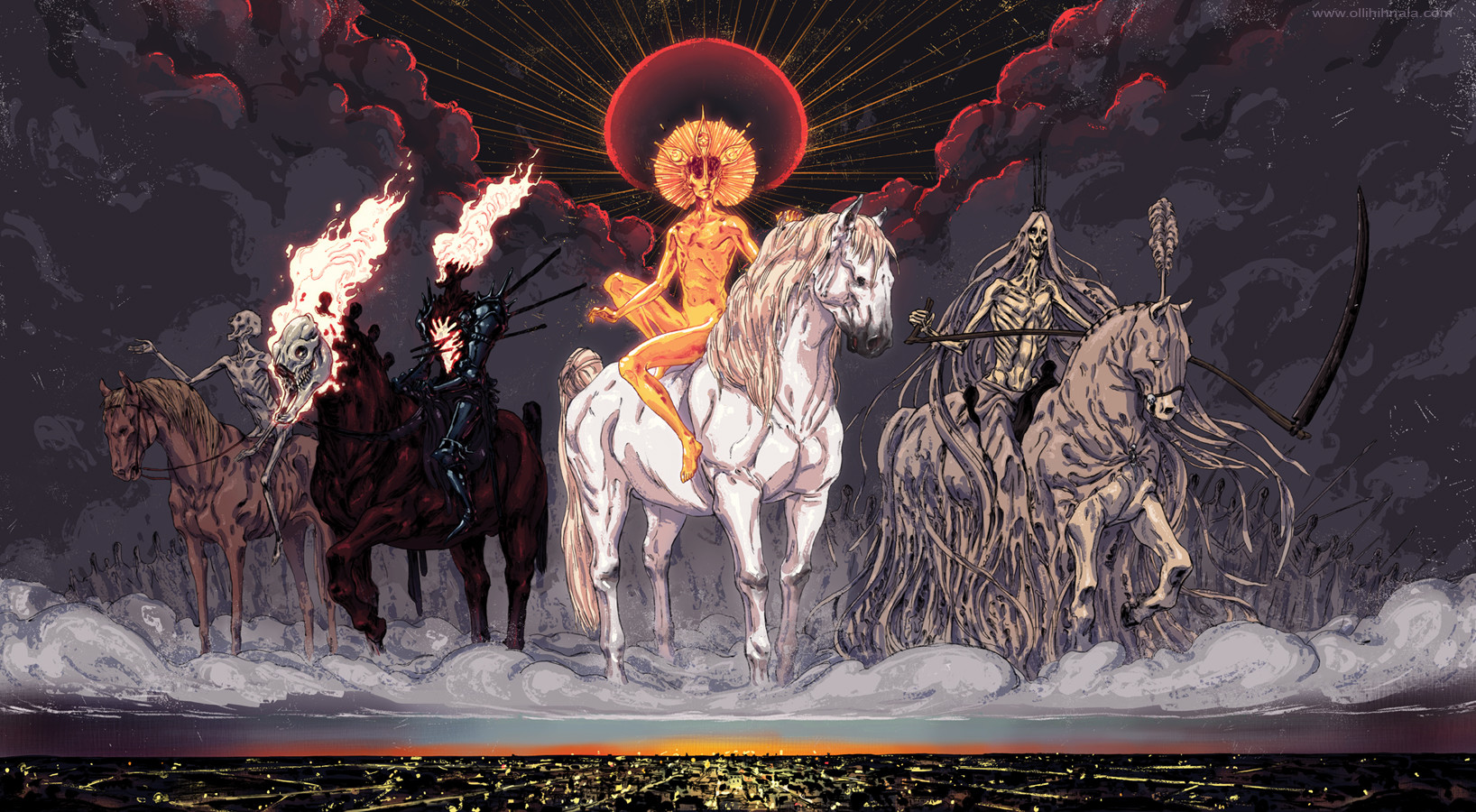
Credit, Olli Hihnala

I'm going to provide a framework to answer the following questions with regards to the nature of the War, in order to flesh out the scenario that the PCs will find themselves in. Mechanical implications that I will detail in a subsequent post.:

  • Where is the conflict occurring?
  • What is the cause of the War?
  • What is the current state of the War?

Where is the conflict occurring?

I've thought up a number of options for this and presented them with my thoughts below.

1. An empire of semi-independent petty kingdoms and principalities
This is the assumed 'default' setting of Pike & Shotte, based on the Holy Roman Empire. While the emperor leads one of the Great Powers (at least in the local region) their realm is riven with innumerable squabbling Princes, Electors, Bishops and Lord Mayors each pursuing their own agenda or forming dangerous factions. External enemies lurk like hungry wolves, preparing to pounce on undefended territories at a moment's notice. Membership of the empire means that the constituent states are (theoretically) bound by oaths of loyalty, but individual cultures, traditions, and even languages may be vastly different from one region to another.

2. A rich and powerful kingdom under threat from a foreign usurper
This takes inspiration from the Hundred Years War, where the Kings of England warred against the Kings of France in various attempts to enlarge their French holdings or contest the French crown. The kingdom is something of a patchwork - the crown is strongly centralised in their own demesne and powerful nobles control much of the reaches. Independent kings and dukes hold suzerainty over lands traditionally considered part of the crown. Levels of lawlessness and wealth may shift rapidly from one region to another. A common language is shared and cultural norms and traditions are roughly comparable between different areas.

3. The borderlands between rival kingdoms
Inspired by the Welsh and Scottish Marches. These bleak and sparse lands see almost constant low-level conflict between rival clans of border reivers. The armies of the rival kingdoms also foray into and beyond the borders in their own raids. The kingdoms can be as similar or distinct as you like, but the marches possess their own hybrid culture that is distinct from either parent, and marcher inhabitants from either side of the border have more in common with each other than their own countrymen.

4. A land divided by civil war
Based on the Wars of the Three Kingdoms. Some matter of religion or politics has divided the people of an isolated country. The different factions seek allies from all avenues to help them in their struggle for supremacy. Regions declare for either side leading to a chaotic spread of allegiances that span the country with little recognisable pattern.

5. A foreign land, or close to home
Somewhat based on the First Crusade, from either perspective. Armies of varying nations have arrived in a foreign land on some sort of mission. The foreign armies exist in a loose alliance but all have their own agendas and desire prestige and wealth. Likewise the local inhabitants have their own factions and plans which complicate their response. Each side may have a little knowledge of the other but vastly different cultures and languages.

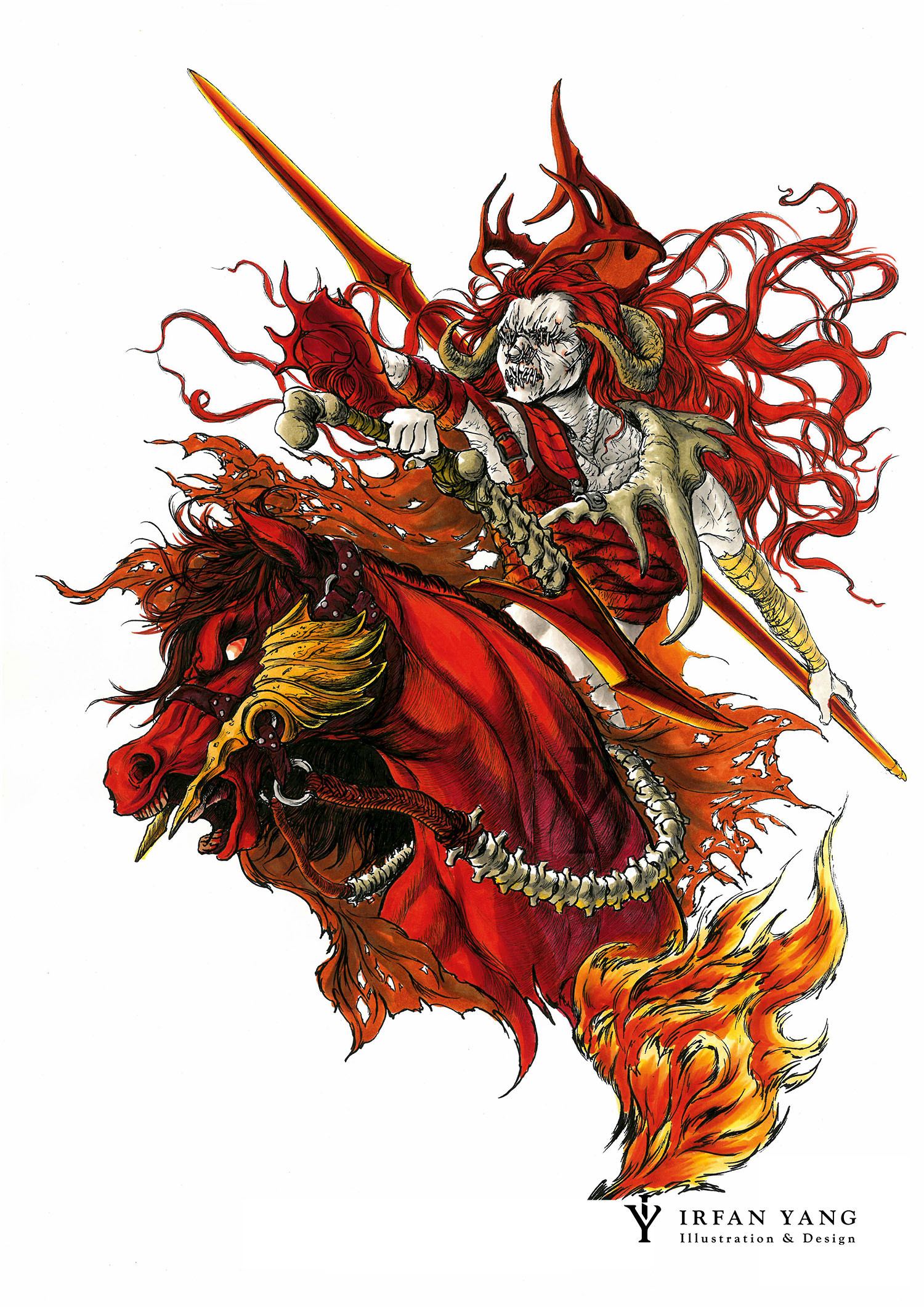
Credit, Irfan Yang


What is the cause of the War?

The War is out of the scope of the usual border squabbles and small scale conflicts. Use these to gauge the overall aims of the warring sides. 

1. Religion
Schism and heresy have long been a cause of bloody wars throughout history. Each side is focused on ensuring that their particular religious ideal is practised as the dominant form of the faith, whether they practise different forms of the same faith or worship different gods altogether. Inter-faith relationships will be even more fraught than usual.

2. Resources
One side wants control or possession something the other one has. Gold, some magical material, opium, tea, water, fertile farmland, wealthy cities - all of these and more could be the target of a warring power. Possessing even a small amount of the desired resources could make the PCs very wealthy indeed.

3. Dynastic struggles
Each side in the war is aligned to a branch of a certain dynasty which, through centuries of intermarriage, has ascended to the thrones of many nations. Either the different branches begin to have designs of their own, or a rival dynasty takes action when they see an opportunity. Widespread fighting breaks out as local nations choose sides and attempt to alter the balance of power. Oaths of loyalty to the dynastic heirs are not taken lightly.

4. Conquest/Colonisation
The attacker desires the complete subjugation or the defender, absorbing their lands in their entirety, or the carving out of their own enclaves. This could be an invasion launched from their homeland or a migration-style invasion where the entire populace is on the move. The defender will be fighting for their very survival.

5. Politics
The commons rise against the king; the nobles demand that their ancient rights are protected; the king grips the country with an iron fist. Some issue of politics or governance has kicked off a brutal civil war, turning countrymen against each other in the throes of ideological fervour. This will not be a simple either/or situation - each side will have numerous sub-factions clamouring for their versions of the True Cause to be given primacy.

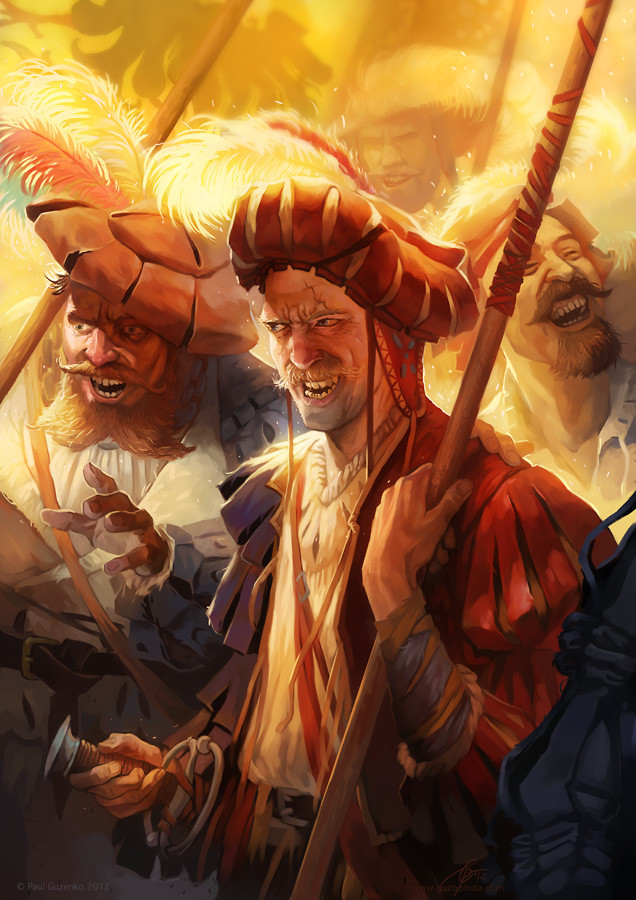
Credit, Paul Guzenko

What is the current state of the War?

1. Opening Phases
The War has only just begun, with only a few participants. Armies have mustered and preliminary skirmishes and small battles have been fought. The land remains mostly unchanged as the armies manoeuvre and prepare for their first pitched battles. Smaller settlements may have been besieged or taken. The land remains relatively unspoiled.

2. Main Thrust
The fighting heats up significantly with several pitched battles being fought. New participants enter the fray and larger settlements are besieged and assaulted. Free Companies start to peel off from the main armies as pay starts to dry up, taking up brigandage and banditry. Food shortages start to bite and the civilian population suffers as turmoil engulfs the land. Disease spreads like wildfire in besieged cities and towns.

3. Late Game
Armies continue to clash, though allegiances may have shifted between the warring powers. Some participants will be knocked out by this point and still some new powers will throw their weight behind one side or another. Roving armies and brigands have picked the countryside clean and famine sweeps the land. Hordes of unwashed bodies in close quarters have spread pestilence to all corners and some areas are virtually depopulated.

Friday, 25 May 2018

OSR Class: Moderatus Wizard

"And as with the potter's clay on the wheel, all aspects of one's life must be in balance. Too much or too little of one thing or another and it will fall..." - Saint Atavus, Sermons

The first of my classes for Pike & Shotte. Inspired by Arnold K.'s Wizard of the White Hand. Some of the spells are stolen wholesale. This class uses the standard GLOG wizard base, as detailed by Skerples, until such a time as I detail my own alterations. My thoughts are presented in italics.

Barber-surgeons are skilled in their craft of steel and blood, but theirs is a crude art. They hack and sew at the body as if it were a hunk of meat, barbaric and destructive even as they heal and repair. The body and mind are finely tuned constructs, designed as they are by the divine, and their holy sanctity must be upheld.

The crimson robes of the monastic Even-Handed Order are commonly seen in the halls of power. Kings, nobles and wealthy burghers call upon the services of the wizards known as Moderati to act as their personal physicians, such are their talents. Much of a Moderatus' handsome fee is paid to the Order, making it exceedingly wealthy and allowing it to fund hospitals and almshouses, leading to a widely held respect for those who wear the sign of the crossed palms. Their noted honesty and charity also helps.

A Moderatus eschews alcohol, incense and laudanum, for these things disrupt the balance of the mind and body. All Moderati have a particular hatred for poisoners and the undead. They meditate often. Women are welcome in their ranks, but rare.

Central to the tenets of the Even-Handed Order is an ideal of balance - the divine created all things in a perfect arrangement which must be maintained, whether this is the body's humours, the soundness of the mind, or the order of society. As such, Moderati tend to be conservative, dour types who dislike change. A Moderatus who rejects the life of hospitaller or court physician will often wander the land, seeking out new remedies for maladies both mundane and magical.

Credit, Andromonoid MJ

Wizard: Moderatus

Additional Starting Equipment: Crimson robes, dagger, 1d10sp, needle & thread.

Status: Chartered.

Perk: You can tell the current dominant humour in a person at a glance. Tailor your conversation carefully.

Moderati know the four temperaments well. They can tell who will be easily provoked to anger, who will not be drawn into impulsive decisions, who thinks this is all a silly game, and so on. This is handy to have when preparing for negotiations.

Drawback: You lose your powers the moment you are exposed to an intoxicant, whether it be alcohol, drugs or poisons. This lasts until the next day.

Note that this covers exposure, not whether or not you actually partake. One splashed drink = one sad wizard.

Cantrips:
1. You may bring [level] pints of water to the boil in moments.
2. You always know the fulcrum of any balanced object.
3. You can clean surfaces by running your hands over them.

These cantrips are geared around the idea of a monastic healer but have some utility to an adventuring party - you can identify unstable objects at a glance, cover traces of your passing and have a last ditch weapon if required.

Credit, Jakub Rebelka

Moderatus Spell List

1. Knit Flesh
Range: Touch; Target: One creature; Duration: Instant
Your touch heals the target of their wounds, restoring 1d6+[dice] HP. Alternatively this can be used to re-attach a severed limb or other body part. Just make sure it's fresh and you arrange it in roughly the right way.

Essentially Cure Light Wounds with added Frankenstein-potential.

2. Charm Person
Range: 120'; Target: One person; Duration: [dice] Turns
You soothe the target's mind, rendering them blindly happy and a little bit in love with you. They will obey any request that you make for the duration, provided that it doesn't go against their own interests or personality. They may Save to resist a request that goes against their interests or personality, but succeeding will not end the effects of the spell. Abuse, neglect and violence will trigger a Save made with 2 Boons and the target will fly into a murderous rage if they break free. The target is aware that they are under the influence of a spell and may be very unhappy when the effects wear off.

3. Purgation
Range: 50'; Target: One creature; Duration: Instant
Your target violently expels the contents of their stomach and bowels as they cramp and spasm, suffering 1d4 damage. Targets may make an additional Save vs a poison or intoxicant effect with 1 Boon and are immobilised for [dice] Rounds. Casting this spell with 3 or more [dice] will inflict [sum]+1 damage, leave the target dangerously dehydrated, immobilise them for [dice]x2 rounds and allow a Save with 2 Boons.

4. Tweak Humour
Range: 60'; Target: One creature; Duration: [sum] Rounds
You harshly alter the humours of your target. Choose an effect from the list below:
Choler: Your target is plunged into a terrible rage, attacking the nearest possible target in melee. The target makes all Attack and Damage rolls with a bonus of [dice] but suffers -2 to Defence/Armour Class.
Melancholy: Waves of depression and anxiety wrap around your target, dulling their senses. The target suffers [dice] Banes on all rolls.
Phlegm: The target must Save or flee for the duration, if they pass their Save they automatically go last in initiative order.
Sanguine: You render the target almost blindly empathetic. If they see one of their comrades injured they suffer equivalent Shock to the amount of damage dealt.

5. Cure Disease
Range: Touch; Target: One creature; Duration: Instant
You draw the miasma of disease out of the target, allowing them to make a new Save with 1 Boon to shake off its effects. It is essential to perform this spell in a well-ventilated area or have a means of bottling or otherwise containing it, lest the miasma concentrate in a bystander's lungs and fester anew.

Plague grenades, anyone?

6. Unbalanced
Range: 60'; Target: One creature or object: Duration: [dice] Rounds
You upset the inner ear of the target, causing a rush of vertigo - they must Save when moving or attacking and fall to the floor if they fail. If you cast this spell with 3 or more [dice] the target falls to the ground, unable to do anything but crawl and retch.

7. Sleep
Range: 60'; Target: [dice] creatures; Duration: [dice]/targets Turns (min. 1 Turn per [dice])
You dull the target's mind with waves of somniference, lulling them to sleep. Violence or rough movement and loud noises will wake the target but gentle handling and normal movements will not. Magical creatures may Save to resist the effects of this spell. Undead, constructs and other creatures that do not require sleep are not affected by this spell.

8. Extract Venom
Range: Touch; Target: One creature; Duration: Instant
You pierce a creature with a sharp object and draw all of the venom out, which then pools in your hand or a vial. If you use this to remove the poison from a poisoned creature, that creature gets a new Save with 1 Boon. You can also use this to draw all of the poison out of a venomous creature. Unwilling venomous creatures may Save to negate this effect.

9. Calm Nerves
Range: 60'; Target: One creature; Duration: Instant
You settle the target's nerves and balance their humours. They heal [sum] Shock and may make a new Save with 1 Boon vs an ongoing mental effect.

10. Hold Creature
Range: 60', Target: One creature; Duration: [dice] Turns
You paralyse the body of the target, rendering them unable to move. Unwilling targets may attempt a Save - if successful they move at half speed, go last in initiative and suffer 1 Bane on all Attack, STR, and DEX rolls.

Emblem Spells
11. Vivigraphy 
Range: Touch; Target: One living creature; Duration: 1 Turn
Your target's body is compelled to answer [dice] questions. This is the flesh body answering, not the mind. The body will answer honestly, but flesh bodies technically see/hear/experience everything the living body does, but they only remember things that involve food, sex, pain, adrenaline responses, and stuff like that. Usually the body will talk using its normal mouth, but it may also communicate the response in other ways, like spelling out answers in freckles. It's always understandable, although sometimes a bit cryptic.

12. Heal
Range: Touch; Target: One creature; Duration: Instant
A wondrous warmth seeps through your target as you cure them of their afflictions. You may heal [dice] afflictions (poisons, diseases etc.) and/or injuries (meaning that they will heal with a night's rest), along with [sum] HP. If you cast this spell with 4 or more [dice] you can restore to life a creature that died in the last Turn. They are restored to life at 0 HP and keep any injuries they suffered before death.

Mishaps
1. MD only return to your pool on a 1-2 for 24 hours.
2. Take 1d6 damage.
3. Random mutation for 1d6 Rounds, then Save with a -4 penalty. Permanent if you fail.
4. You hands knot and twist for 1d6 Turns. Fine manipulation and spellcasting is impossible.
5. Your teeth fall out and shape themselves into bone needles, -4 CHA. They regrow overnight.
6. Your humours are unsettled for 1d6 Turns. Suffer a Bane on all rolls.

Dooms
1. You become gaunt and sickly. You must Save each day or contract a minor illness (cold, conjunctivitis etc.) with appropriate penalties. These diseases are cumulative.
2. Your body withers and decays. As above, but you contract a major illness (smallpox, cholera etc.).
3. Your mind shatters as your body erupts as a maggot-ridden hive of disease and sickness. All within 50' of you must Save or contract the Plague. You caper madly, spreading filth and corruption wherever you tread.

Credit, Kseniia Tselousova
This class has a variety of healing spells befitting a physician-wizard, as well as means of controlling others through mental and physical effects. Being able to restore a recently killed target to life is amazingly powerful in this system, but obtaining that spell will take some doing. Direct damage is limited, but being able to make an enemy shit themselves so hard they curl into the foetal position has to count for something.

Mishaps are moderately inconveniencing, especially if in a dangerous area, but the Dooms are pretty nasty - you could end up spreading a variety of wonderful pestilences to your party and then end up as a sloppity bilepiper.

Anicet District

A post-apocalyptic mini-crawl. For use with Violence. , by Luke Gearing. Work in progress. Weather Roll 1d6 at the commencement of play. Rol...

Popular Posts